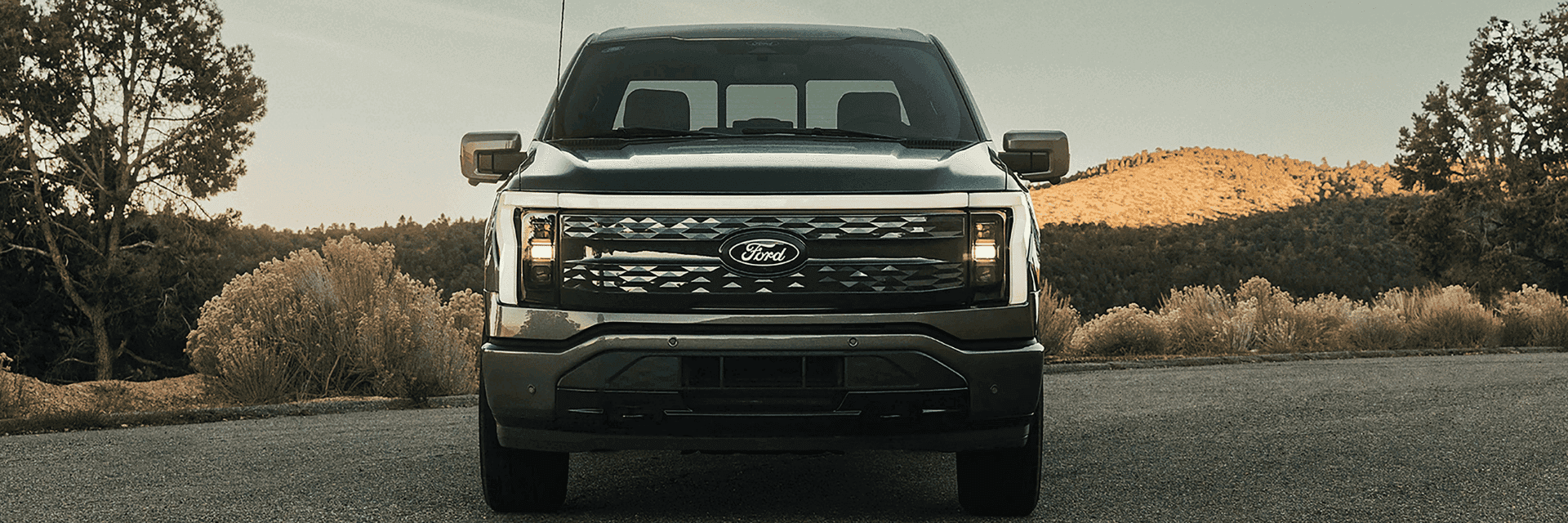

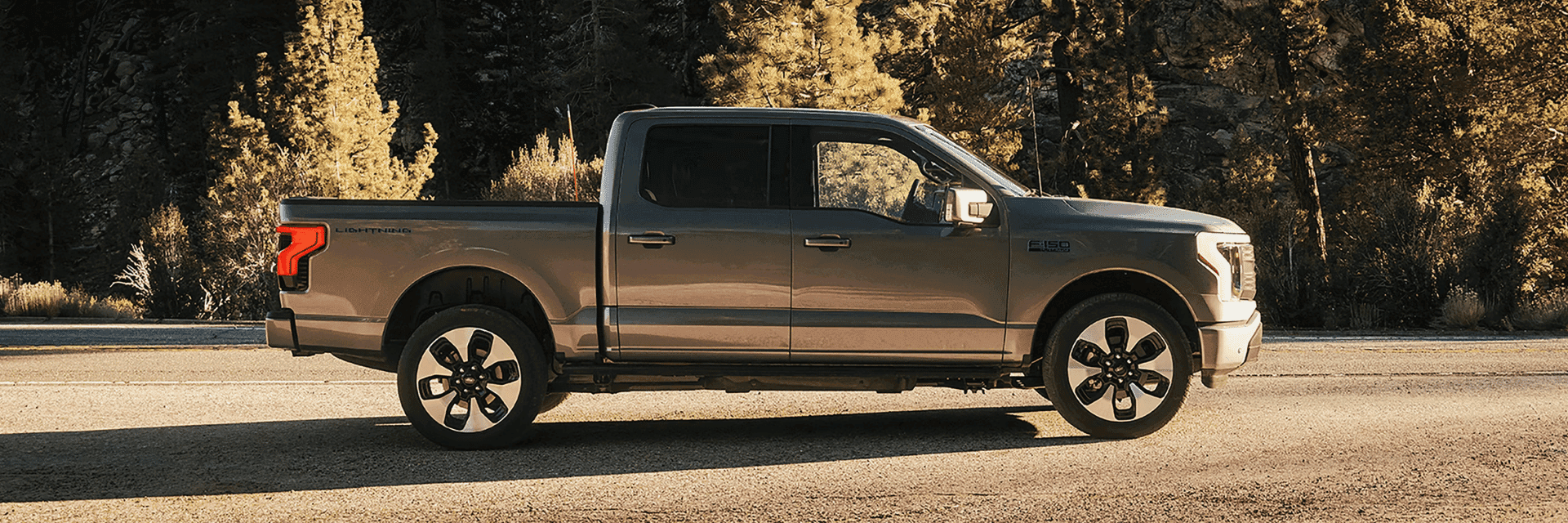
Should You Buy a Ford F-150 Lightning in 2025?
The F-150 Lightning is Ford's answer to decades of "electric trucks can't handle real work" skepticism.
With Tesla's Cybertruck finally hitting roads, Rivian gaining momentum, and GM's Silverado EV entering the fray, 2025 has become the make-or-break year for electric pickup dominance. This heated competition arrives at a pivotal time for truck buyers—federal tax credits are shifting, charging infrastructure is expanding rapidly, and real-world performance data is finally replacing manufacturer promises.
At the same time, contractors need serious towing capacity, weekend warriors want to haul boats and ATVs without compromise, and environmentally conscious drivers refuse to sacrifice truck versatility.
Ford's Lightning promises to deliver for all of them, but the real question is whether the F-150 Lightning is ready for your specific needs, budget, and timeline.
In this comprehensive guide, we'll examine everything from real-world performance and charging realities to current incentives and long-term value to help you decide if you will buy a Ford F-150 Lightning in 2025.
Performance and Powertrain Options of the Ford F-150 Lightning
At its core, the F-150 Lightning is engineered to deliver the instant torque and responsive power characteristic of electric vehicles, all while maintaining the familiar F-150 footprint. Every 2025 Lightning model comes standard with a dual-motor, all-wheel-drive system, ensuring capable traction in a variety of conditions. The primary difference in performance comes down to the battery choice.
- Standard-Range Battery: This configuration produces a robust 452 horsepower.
- Extended-Range Battery: Opting for the larger battery increases the output to an impressive 580 horsepower.
Both versions produce a massive 775 lb-ft of torque, allowing for startlingly quick acceleration. The extended-range model can launch from 0 to 60 mph in just 4.0 seconds, a figure that rivals high-performance sports cars, let alone other trucks.
Trim Level
(98 kWh)
452 hp
Torque
775 lb-ft
(131 kWh)
536 hp*
775 lb-ft
(131 kWh)
580 hp
775 lb-ft
Real-World Towing and Payload Capability of the Ford F-150 Lightning
A truck is defined by its ability to do work, and the F-150 Lightning is built to be a capable hauler. However, it’s important that you understand its real-world limitations, particularly when towing.
Towing Capacity
7,700 lbs
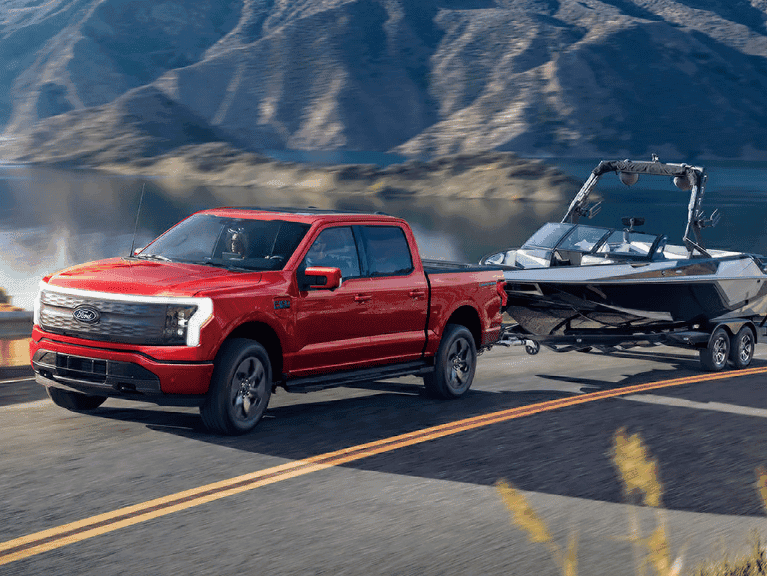
Standard-Range Battery10,000 lbs
Extended-Range Battery and Max Trailer Tow Package
Payload Capacity
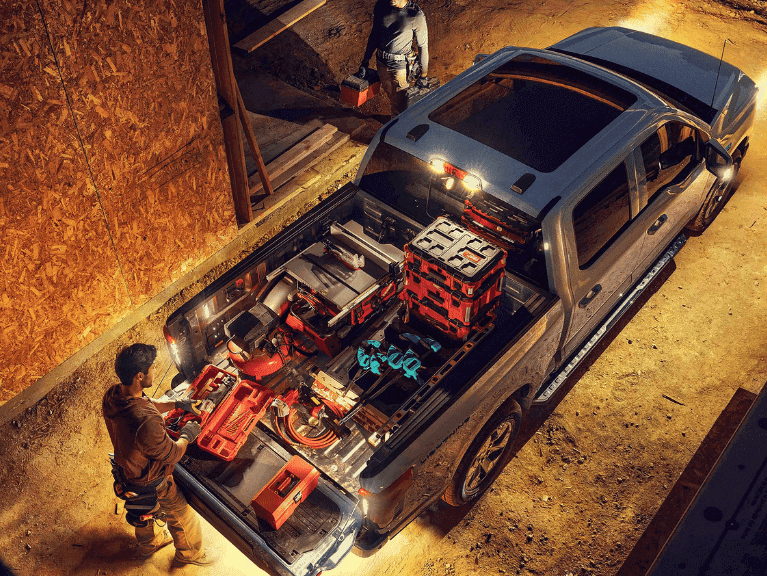
2,235 lbs
Standard-Range Battery1,800–1,952 lbs
Extended-Range BatteryThe most significant consideration is the impact of towing on driving range. Independent, real-world tests have consistently shown that towing a substantial load can reduce the Lightning's range by as much as two-thirds. In one test pulling a 6,100-pound trailer, the effective range dropped to just 100 miles.
This makes the Lightning an excellent choice for short-range towing—like taking a boat to a local lake or moving equipment across town—but it requires careful planning for long-distance hauls.
To assist with these tasks, Ford equips the Lightning with smart technology like Pro Trailer Backup Assist™, which simplifies the process of reversing a trailer with the turn of a knob.
Battery, Range, and Charging Explained
Range and charging are the cornerstones of the EV ownership experience. The F-150 Lightning offers multiple battery options to fit different needs and budgets.
|
Battery Option |
Usable Capacity |
EPA-Estimated Range |
|---|---|---|
| Standard-Range | 98 kWh | Up to 240 miles |
| Extended-Range | 131 kWh | Up to 320 miles |
While EPA estimates provide a useful benchmark, real-world highway driving often yields different results. Independent tests have shown the extended-range model achieving between 230 and 270 miles at a consistent 70-75 mph.
When it's time to recharge, you have several options:
|
Charging Method |
Battery |
Time to Charge (15-80%) |
|---|---|---|
| DC Fast Charging | Standard-Range (98 kWh) | ~32 minutes |
| Extended-Range (131 kWh) | ~38 minutes | |
| Level 2 Home Charging (240V) | Standard-Range (98 kWh) | ~10 hours (15-100%) |
| Extended-Range (131 kWh) | ~13 hours (15-100%) |
For 2025, the Lightning comes standard with a NACS (Tesla) adapter, granting access to Tesla's extensive Supercharger network and significantly expanding public charging options.
Interior, Technology, and Unique Features of Ford F-150 Lightning
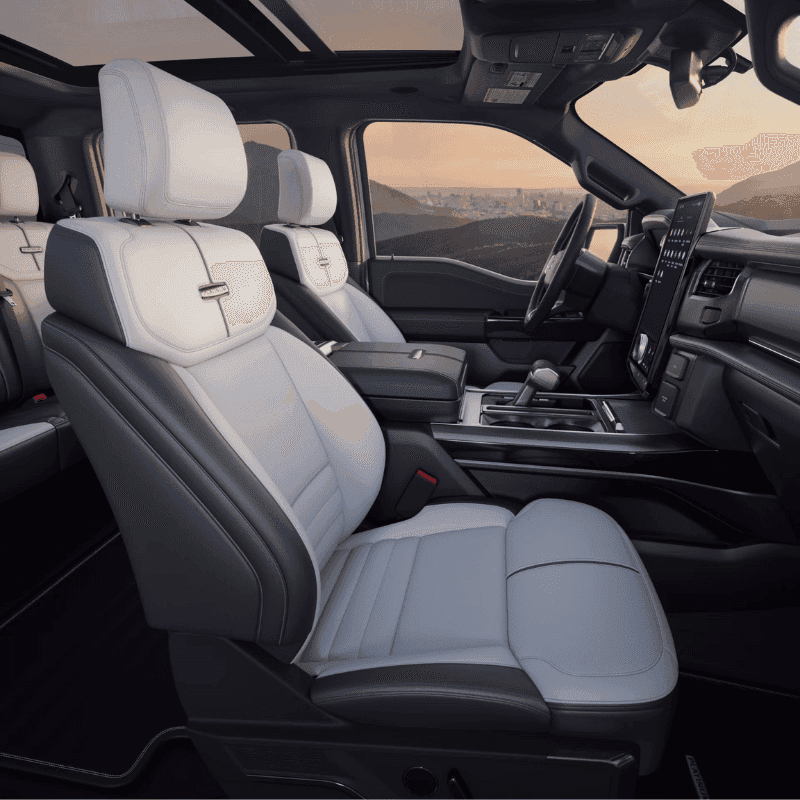
The F-150 Lightning's interior is nearly identical to its gas-powered counterpart, offering a familiar, spacious, and functional cabin that seats up to five people. Higher trims elevate the experience with premium materials like genuine wood and leather, while top-tier Platinum models feature multi-contour massaging front seats.
Technology is a clear highlight, with a standard 12-inch digital instrument cluster and a 12-inch SYNC 4 touchscreen on lower trims.
The Flash, Lariat, and Platinum trims feature a stunning 15.5-inch vertical touchscreen with SYNC 4A.
Beyond the screen, the Lightning offers game-changing features that are only possible with an electric platform:
- Mega Power Frunk: With the engine gone, the front of the truck becomes a massive, 14.1-cubic-foot front trunk that is water-resistant, lockable, and equipped with power outlets.
- Pro Power Onboard™: This feature turns the truck into a mobile generator, providing up to 9.6 kW of power through various outlets in the bed, cab, and frunk—enough to power a job site, a campsite, or even your home for up to three days during an outage.
Ford F-150 Lightning vs. Rivian R1T vs. Chevrolet Silverado EV
Range (Max)
F-150 Lightning: Up to 320 miles
Rivian R1T: Up to 400+ miles
Chevrolet Silverado EV: Up to 492 miles
Towing Capacity
F-150 Lightning: Up to 10,000 lbs
Rivian R1T: Up to 11,000 lbs
Chevrolet Silverado EV: Up to 12,500 lbs
Payload
F-150 Lightning: Up to 2,235 lbs
Rivian R1T: -
Chevrolet Silverado EV: Up to 2,350 lbs
Starting Price
F-150 Lightning: ~$49,000 (Pro)
Rivian R1T: ~$75,000
Chevrolet Silverado EV: ~$57,000
Power Output
F-150 Lightning: 452-580 hp
Rivian R1T: 402-533 hp
Chevrolet Silverado EV: 510-754 hp
The Lightning's Sweet Spot
The F-150 Lightning's advantage lies in its proven truck platform and accessible pricing. While competitors may offer more range or flashier features, the Lightning delivers familiar F-150 capability in an electric package that doesn't require learning new systems or finding new service centers. For buyers who want electric without compromising the truck experience they know, the Lightning remains the most practical choice.
Who Should Buy the F-150 Lightning in 2025?
The 2025 Ford F-150 Lightning is an outstanding truck, but it's not for everyone. It is an ideal choice for a buyer who:
- Primarily uses their truck for daily driving, commuting, and local hauling.
- Can install a Level 2 charger at home for convenient and cost-effective overnight charging.
- Values the instant acceleration, quiet ride, and lower maintenance costs of an EV.
- Can take advantage of the significant federal and state incentives before they expire.
If you frequently tow heavy loads over long distances or lack access to reliable home charging, a gas or hybrid F-150 may remain a more practical option for now.
For the right customer, 2025 is a pivotal year to buy the F-150 Lightning. It delivers a compelling blend of traditional truck utility and innovative electric technology, with the added, urgent incentive of a federal tax credit that is quickly approaching its end date.
Conclusion
The 2025 Ford F-150 Lightning represents a mature, practical entry into the electric truck market that doesn't ask you to compromise on the core capabilities that make F-150 America's best-selling truck. With a real-world range that works for most daily driving, impressive towing capacity for weekend adventures, and innovative features like Pro Power Onboard that gas trucks simply can't match, the Lightning delivers on Ford's promise to electrify the iconic F-150 without sacrificing its work-ready DNA.
F-150 Frequently Asked Questions We’re here to help answer any questions. Feel free to read over our Frequently Asked Questions below.
Are there charging stations near Kent for the F-150 Lightning?
Yes, Kent and the greater Seattle area have numerous charging options. The Lightning comes with access to Ford's BlueOval Charge Network, which provides over 75,000 chargers throughout North America, including 150kW DC fast chargers that can add 54 miles of range in just 10 minutes. Additionally, the 2025 model includes an NACS adapter for Tesla Supercharger access.
How much does it cost to charge the F-150 Lightning at home?
Home charging costs vary by local electricity rates, but it's typically much cheaper than gasoline. In Washington state, with average residential rates around $0.11 per kWh, a full charge of the extended-range battery (131 kWh) would cost approximately $14.41, providing up to 320 miles of range.
Can I use the Lightning for work and towing?
Absolutely. The Lightning offers impressive work capability with up to 10,000 pounds of towing capacity (extended-range with Max Trailer Tow Package) and up to 2,235 pounds of payload. The Pro Power Onboard feature provides up to 9.6 kW of power through various outlets, essentially turning your truck into a mobile generator for job sites.
What happens if I run out of charge on the road?
Ford provides Roadside Assistance that can help you reach a charging station, your home, or an EV-certified dealer within 35 miles of where you're stranded. This service is included with your F-150 Lightning purchase.
How long does it take to charge the F-150 Lightning?
Charging times depend on the method: DC fast charging can achieve a 15-80% charge in 32-38 minutes, while Level 2 home charging takes 10-13 hours for a full charge (15-100%). The Ford Charge Station Pro can charge from 15-100% in as little as 8 hours with the extended-range battery.
Where can I buy the F-150 Lightning in Kent, Washington?
Bowen Scarff Ford, located at 1157 Central Ave N, Kent, is your local authorized Ford dealer for the F-150 Lightning. As a family-owned dealership serving the Pacific Northwest since 1958, we offer a no-pressure buying experience with non-commissioned sales experts. You can contact us at (253) 852-1480 or here.