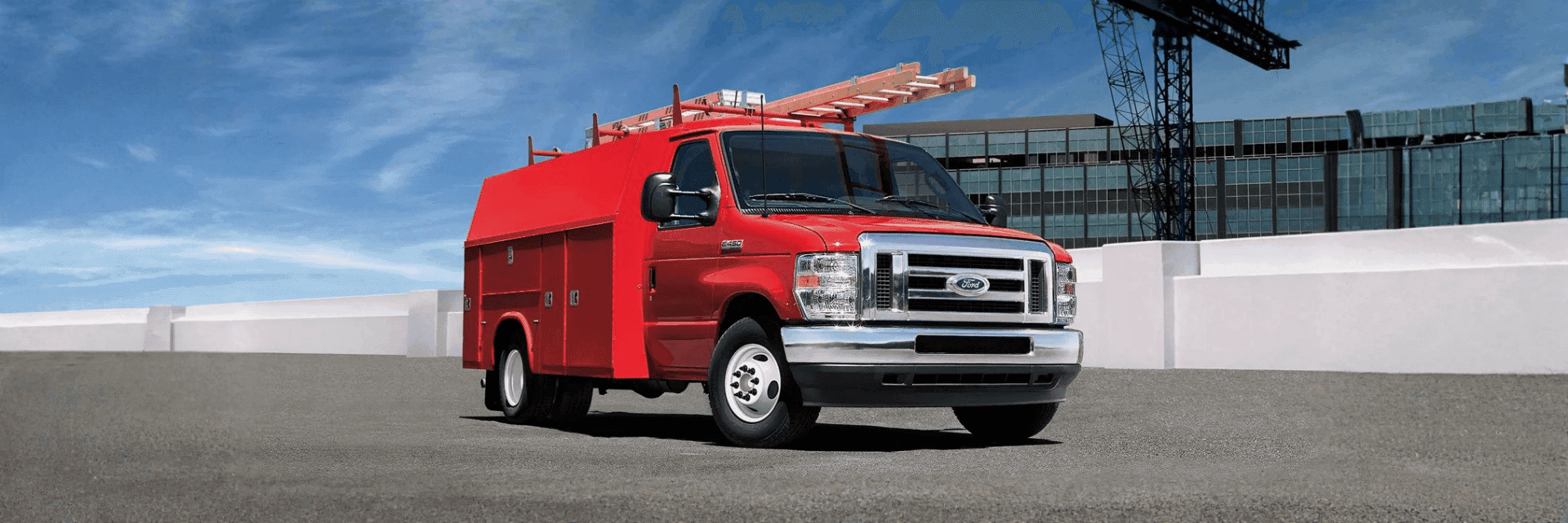

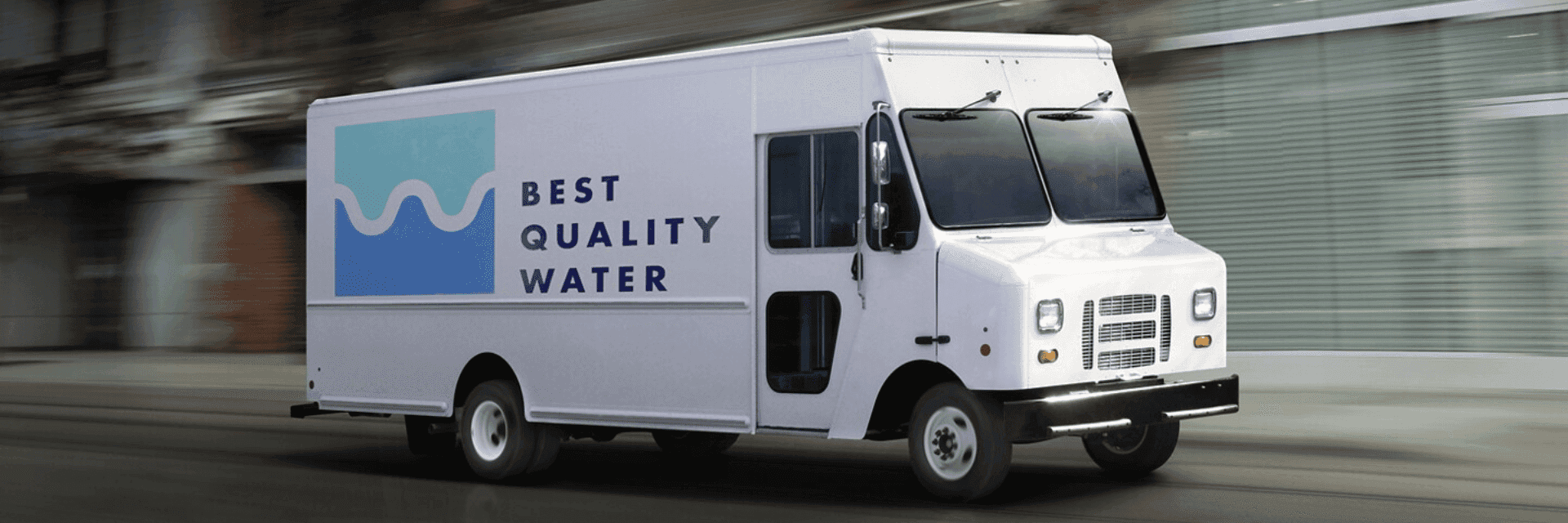
Step-Vans-Banner-mobile

Why Ford Step Vans Are a Top Choice for Delivery & Mobile Services

If you run a delivery business, food truck, or mobile service operation, you know that the van you choose can make or break your efficiency.

This is especially true in dynamic and competitive regions like the Pacific Northwest. From the massive warehousing and distribution centers in the Kent Valley to the dense, bustling streets of Seattle, businesses face unique challenges like traffic congestion and high customer expectations, and success often comes down to how effectively you can move goods and services.

That’s why Ford step vans have earned a reputation as a go-to choice for business owners who value durability, generous space, and easy access all in one vehicle.

Whether you’re delivering packages across town or transforming your van into a mobile workspace, Ford’s lineup of commercial vans offers solutions for every need.

In this comprehensive guide, we'll take a deep dive into the world of Ford vans. We'll explore the powerful chassis that forms their foundation, compare the different models to see which workflow they fit best, and show you how customization can turn a great van into the perfect tool for your specific industry.

How Step Vans Are Built (And Why It Matters)

Step vans aren't regular vehicles you can buy from a dealership lot. Instead, they're created through a smart two-step process that makes them incredibly versatile for different businesses.

Here's how it works: Ford builds the mechanical foundation—the heavy-duty chassis, engine, and drivetrain—while specialized companies called "upfitters" (like Morgan Olson and Utilimaster) design and attach the custom walk-in body on top. This division of labor means you get Ford's proven reliability underneath, with a workspace above that's built specifically for your type of work.

Ford provides two main platforms for this process:

F-59 Commercial Stripped Chassis

This is essentially a rolling frame with a powerful 7.3L V8 engine attached. Upfitters build the entire cab and cargo area from scratch, creating those large, integrated step vans you see delivering packages or serving food. It's built for the heaviest-duty applications.
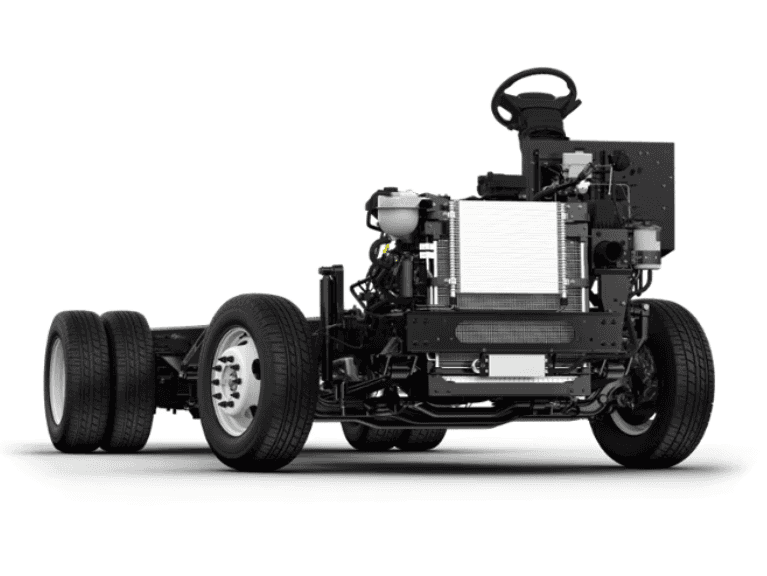
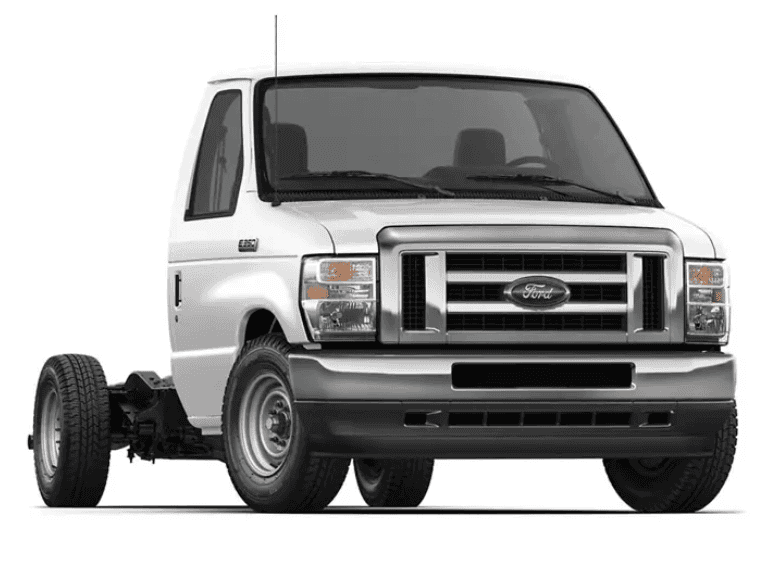
2025 F-59 Commercial
2025 Ford E-Series Single-Rear-wheel Cutaway

E-Series Cutaway

This keeps Ford's factory-built cab (the driver's area) but cuts away everything behind it, leaving a flat platform where upfitters attach a separate cargo box. Also powered by the 7.3L V8, it's perfect for lighter-duty step vans and offers incredible flexibility for different business needs.

This partnership approach explains why step vans are so practical—they combine automotive engineering expertise with specialized commercial vehicle knowledge.

Ford Step Van Chassis Comparison

Chassis Model

Type

Standard Powertrain

GVWR Range

Ideal For

Ford F-59

Stripped Chassis

7.3L V8 / 335 hp / 468 lb-ft 

16,000 - 22,000 lbs 

High-volume delivery, large food trucks, maximum payload needs.

Ford E-Series

Cutaway

7.3L V8 / 325 hp / 450 lb-ft 

10,050 - 14,500 lbs 

Box trucks, shuttle buses, service vehicles, Class C motorhomes.

Step Van vs. Transit: Choosing the Right Tool for Your Workflow

While a step van is the king of high-frequency stops, it’s not the only tool in the shed. Ford’s Transit van is another incredibly popular choice, but it’s built for a different kind of work. The best van for you depends entirely on your daily workflow.

  • The Delivery Driver: Imagine a typical day for a driver working out of a Kent Valley distribution center. They have hundreds of packages to deliver. For them, every second counts. The step van is built for this. The low entry, sliding door, and walk-through access to the cargo area mean they can get in, grab a package, and get out in a fraction of the time. Over a full shift, this ergonomic design saves time, reduces physical strain, and directly boosts the number of deliveries they can make.
  • The Skilled Tradesperson: Now, picture an electrician heading to a job site. They need to bring thousands of dollars in tools, parts, and supplies. For them, organization and security are paramount. The Ford Transit is their mobile workshop. It’s an enclosed, secure space that can be upfitted with custom shelving and bins to keep every tool and component perfectly organized. Quick entry and exit is less important than having the right part at the right time.

Step Van vs. Transit: Key Differences

Operational Factor

Step Van (on F-59/E-Series)

Transit Cargo Van

E-Transit Cargo Van

Primary Advantage

Speed of access & driver ergonomics

Security & cargo organization

Low operating cost & zero emissions

Best For

High-frequency stops (delivery, food service)

Skilled trades, mobile services, equipment transport

Predictable daily routes, eco-conscious fleets

Cargo Access

Walk-through from cab

Separate cab and cargo

Separate cab and cargo

Max. Cargo Volume

Very High (custom body up to 972+ cu. ft.) 

High (up to 536.4 cu. ft.) 

High (up to 536.4 cu. ft.) 

Maneuverability

Good for its size

Good

Good

Ideal Puget Sound Use

Last-mile delivery in Kent, food trucks in Seattle

HVAC/Plumbing contractors, electricians 

Food distributors, municipal fleets, airport shuttles

Real-World Performance: What You Can Actually Expect

Fuel Costs That Make Sense

Gas-Powered Step Vans

When you're running a step van with Ford's 7.3L V8, you're looking at roughly 10-13 mpg depending on your route and driving style. For a business doing 100 miles per day, that's about 8-10 gallons of fuel daily.

Electric E-Transit

The E-Transit goes up to 159 miles on a single charge, and since most commercial routes average 74 miles per day, you'll easily handle a full day's work. The real savings are in 40% lower maintenance costs over 8 years compared to gas vans, plus electricity costs significantly less than gasoline.

What Your Van Can Carry

Step Van Capacity

  • F-59 chassis: Can handle 16,000-22,000 lbs total weight
  • E-Series: Handles 10,050-14,500 lbs total weight
  • Custom bodies can create over 970 cubic feet of cargo space

E-Transit Capacity

  • Payload: Up to 3,960 lbs
  • Same cargo dimensions as regular Transit (up to 536 cubic feet)

Delivery Speed

Here's what actually happens during deliveries: In a step van, drivers walk through from the cab to grab packages without going outside. This saves 15-30 seconds per stop. With 150+ stops per day, that's 45+ minutes saved daily. Over a year, that's weeks of additional productivity.

Maintenance

  • Gas step vans: Oil changes every 3,000-5,000 miles, plus spark plugs, air filters, exhaust system repairs
  • E-Transit: Service every 10,000 miles, no oil changes, no spark plugs to replace

Ford Step Vans Technology That Helps Your Business

Ford Pro Intelligence: Your Fleet Command Center

Think of Ford Pro Intelligence as having a dispatcher who never sleeps. It tracks where your vehicles are, alerts you to problems before they become breakdowns, and helps you manage everything from one dashboard.

What It Actually Does:

  • Sends you a text if your van breaks down
  • Tracks fuel usage to catch inefficient routes or driver habits
  • Schedules maintenance automatically
  • Helps recover stolen vehicles
A worker looking at a tablet on a job site.
A cityscape with light beams shooting up to the sky

Fleet Management Made Simple

Starting at $5 per month per vehicle, Ford's fleet software replaces those spreadsheets and paper receipts with automatic tracking. It works with any vehicle, not just Ford ones.

Real Business Benefits:

  • No more lost fuel receipts
  • Automatic maintenance reminders
  • Track which driver is using which van
  • Monitor fuel costs in real-time

Mobile Apps That Actually Work

For Drivers - FordPass App (Free):

  • Start the van remotely while loading packages
  • Check if doors are locked from anywhere
  • Find the van in crowded parking lots
  • Get maintenance alerts before problems happen

For Fleet Managers - FordPass Pro:

  • Monitor up to 5 vehicles on one screen
  • Get alerts when AdBlue fluid is low
  • Lock/unlock cargo areas separately from driver cab
  • Set up alerts if someone uses the van outside work hours

E-Transit Specific Features:

  • Check the battery level from your phone
  • Find nearby charging stations
  • Precondition the cabin while plugged in to save battery for driving
  • Manage charging costs and employee reimbursements

Person using a mobile app on a smartphone to control the features of a Mustang Mach-E, with options to lock, unlock, and access climate controls.
2025 Ford E-Series Cutaway | Power Features

Customizing your Ford Step Van

A Ford commercial van is a blank canvas. The process of "upfitting" is what turns it into a purpose-built tool for your specific trade. A knowledgeable commercial vehicle dealer can be an invaluable partner here, connecting you with certified Ford Pro Upfitters who can bring your vision to life. 

Here are a few examples of how you can tailor a van for key industries in Kent:

  • The Logistics & Last-Mile Delivery Build: The Kent Valley is the second-largest industrial park on the West Coast, a hub for giants like Amazon and REI.  For these high-volume operations, an F-59 step van upfitted with lightweight, folding aluminum shelves and a secure bulkhead door is the gold standard for efficiency. Integrating Ford Pro Telematics provides real-time data to optimize routes and manage your fleet effectively. 
  • The Food & Beverage Service Build: From Seattle's famous food trucks to the region's many craft breweries and caterers, a van often needs to be a mobile kitchen or a refrigerated warehouse.  An E-Series or F-59 chassis can handle the weight of commercial cooking equipment.  Upfitters can install stainless-steel surfaces, refrigeration units, and high-capacity power systems using Ford's factory-installed upfitter switches. The all-electric E-Transit is a game-changer here, with its available Pro Power Onboard feature that can run equipment without a noisy, separate generator. 
  • The Mobile Trades & Services Build:   The Pacific Northwest's booming construction and tech industries rely on skilled tradespeople. For them, a Ford Transit is the perfect mobile workshop. It can be upfitted with vocation-specific shelving packages or HVAC technicians, keeping every tool and part secure and organized. Adding ladder racks and durable floor protection completes the package. 

Why Total Cost of Ownership Matters

Smart business owners know that the sticker price is only the beginning of a vehicle's cost. The true measure is the Total Cost of Ownership (TCO) , which includes fuel, maintenance, and insurance over the life of the vehicle. When you compare a gas-powered van to the all-electric Ford E-Transit , the long-term savings can be dramatic. 

  • Fuel vs. Electricity: The cost of electricity is significantly lower and more stable than gasoline. Over five years and 100,000 miles, an E-Transit can save thousands in fuel costs alone. 
  • Maintenance Savings: The E-Transit has no oil changes, spark plugs, or exhaust systems to maintain. This can cut maintenance and repair costs by nearly 50% compared to a gas model, but more importantly, it means more uptime—more time on the road making money for your business.
2024 Ford F-Series Stripped Chassis

Final Thoughts: Finding the Right Van for Your Business

Choosing the right van is a strategic decision. By analyzing your daily workflow, understanding the potential for customization, and looking at the total cost of ownership, you can equip your business with a vehicle that doesn’t just get the job done but helps you do it better, faster, and more profitably.

If your business depends on speed, volume, and driver efficiency, a Ford step van is an investment that pays dividends every single day. It’s a tool purpose-built for the demanding stop-and-go reality of modern delivery and mobile service.

For those who need a secure and highly organized mobile base of operations, the Ford Transit remains the undisputed champion of the trades. And for businesses looking to the future, the Ford E-Transit offers a compelling financial and environmental case that’s becoming impossible to ignore.

Ford Vans Frequently Asked Questions We’re here to help answer any questions. Feel free to read over our Frequently Asked Questions below.

Menu

Get Directions

1157 Central Avenue North, Kent, WA, 98032
Bowen Scarff Ford 47.395529, -122.228139.