
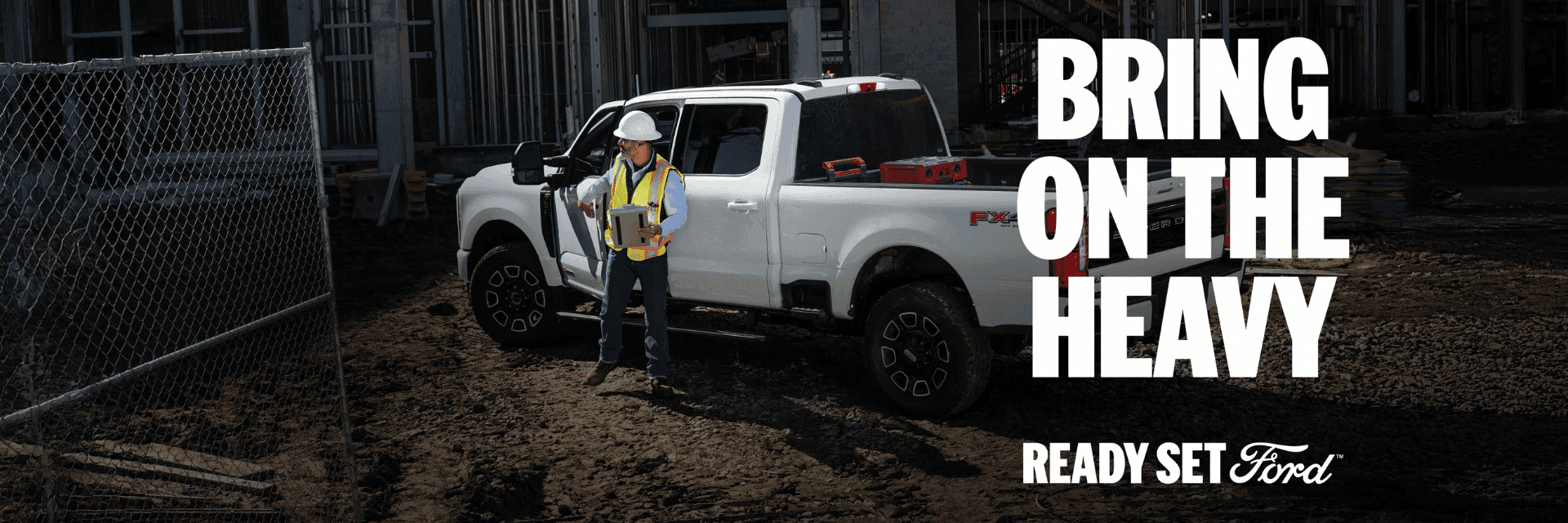
A manager stands outside their 2026 Ford Super Duty® truck at a build site

What Is a Ford Service Body Truck and Why Your Business Might Need One

If your business depends on tools, equipment, and getting the job done efficiently on-site, a standard pickup truck might not cut it. A Ford service body truck could be a better fit.

Built with integrated storage compartments, utility features, and heavy-duty capability, these trucks are a go-to for contractors, electricians, plumbers, and mobile service teams.

In this guide, we’ll break down what a Ford service body truck is, how it differs from other work vehicles, and why it might be exactly what your business needs to boost productivity and stay organized.

What Is a Ford Service Body Truck?

A Ford service body truck is a work truck built with an open cargo bed that's replaced by a utility body—typically featuring lockable side compartments, shelving, and custom storage. It’s designed to keep tools and parts organized, secure, and easily accessible while on the job.

These trucks are commonly built on Ford Super Duty chassis like the F-250 , F-350, or F-450 and are upfitted with bodies from trusted manufacturers. The result is a purpose-built vehicle that can handle heavy loads and keep everything you need within reach.

The Anatomy of a Ford Service Body Truck: More Than a Pickup

To truly understand the value of a Ford Service Body Truck, you must first appreciate its construction. It is not a single entity but a fusion of two distinct, purpose-engineered components: a robust chassis cab and a highly functional service body upfit. This combination creates a vehicle fundamentally different from a standard pickup, shifting its role from a simple transport tool to a specialized piece of industrial equipment.

How is a Service Body Truck Different from a Regular Pickup?

While both a service truck and a standard pickup can get you and your gear to a job, their approaches to work are fundamentally different. A service body truck is built for functionality, whereas a standard pickup prioritizes versatility.

Here is how they compare:

Organization

A service truck provides a built-in system of dedicated storage. Every tool, part, and piece of equipment has its place, secured in a designated compartment. A standard pickup offers a single, open cargo bed that requires expensive and often less integrated aftermarket toolboxes and containers to achieve a fraction of the same organizational efficiency.

Security

The lockable, weather-sealed steel or aluminum compartments of a service body protect thousands of dollars in tools and equipment from theft and the elements. Cargo in a pickup bed is exposed and vulnerable unless protected by a tonneau cover, which can limit access and the ability to carry oversized items.

Accessibility

This is a major, often overlooked, efficiency advantage. With a service body, your tools are accessible from the sides of the vehicle. You can walk up to a compartment, open the door, and retrieve what you need without ever having to climb into the truck bed. This saves time and reduces physical strain over hundreds of job site visits per year.

Professionalism

The image your vehicle projects to a client matters. Arriving in a clean, well-organized service truck conveys a sense of competence, preparedness, and professionalism. A cluttered, disorganized pickup bed can send the opposite message before you even step out of the cab.

In short, a standard pickup is a vehicle that transports you to your work. A Ford Service Body Truck is a tool that helps you do your work.

Power and Capability of the Ford Super Duty Chassis

To select the right service truck, you must match its capabilities to the specific demands of your daily workload. This requires a deeper understanding of the powertrain options and the engineering that underpins the Ford Super Duty Chassis Cab lineup. Moving beyond simple horsepower figures reveals how these trucks are designed for real-world applications, from hauling heavy machinery to powering equipment on a remote job site.

Powertrain Options

Ford offers two distinct and powerful engine options for its Super Duty Chassis Cabs, each designed for different operations.

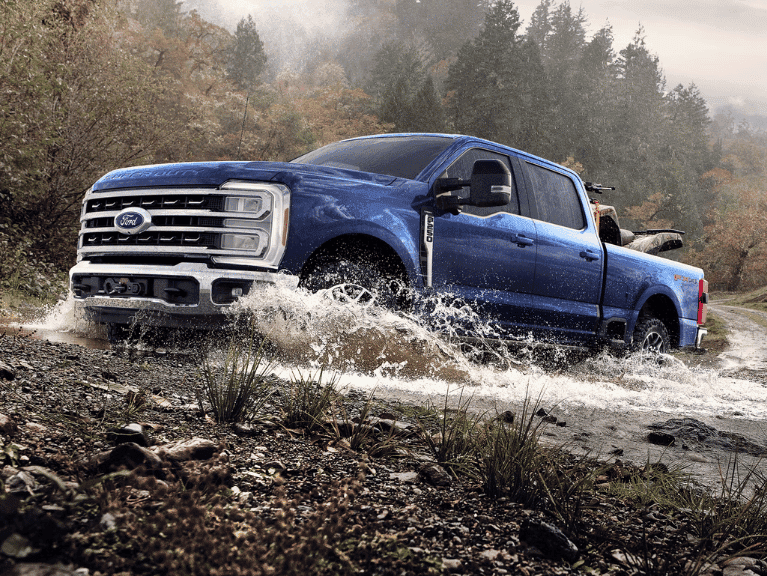
2026 Ford Super Duty® F-250® Lariat® pickup with the Tremor® Off-Road Package driving through a shallow creek

Standard Gas Powerhouse: The 7.3L V8 Gas Engine

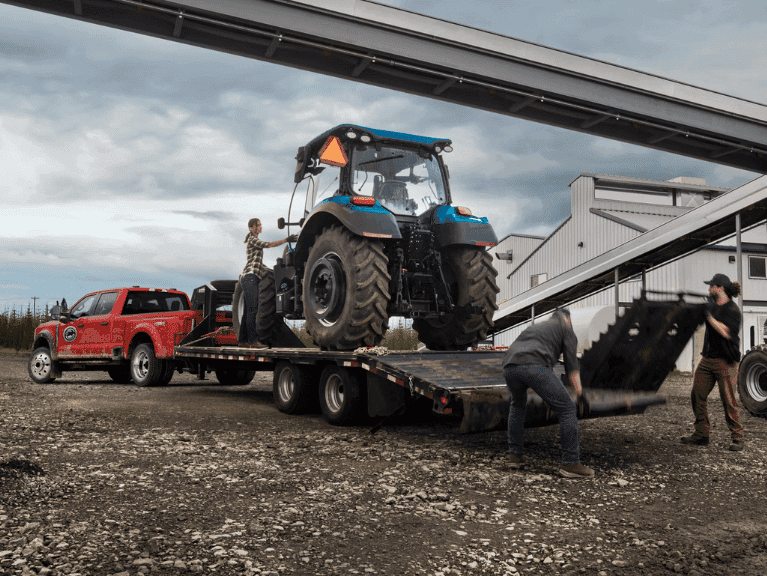
2026 Ford Super Duty® F-450® XL pickup in Race Red pulling a trailer carrying a large tractor

The Torque King: The 6.7L Power Stroke V8 Turbo Diesel

Both of these formidable engines are paired with Ford's heavy-duty TorqShift® 10-speed automatic transmission. This is not the same transmission found in light-duty trucks; it is purpose-built for commercial applications with a robust torque converter and gear sets. It features Selectable Drive Modes, including Normal, Tow/Haul, Slippery, and Eco, allowing you to instantly optimize the transmission's shift logic for the task and conditions at hand, whether navigating a wet Seattle street or towing a heavy load up to Snoqualmie Pass.

Matching Capability to Your Workload

The Ford Super Duty lineup is tiered to offer progressively higher capabilities. 

The Gross Vehicle Weight Rating (GVWR) is the maximum legal weight of the truck, including itself, fuel, passengers, and all cargo. Payload is what’s left for your body, equipment, and materials after you subtract the truck's base weight from the GVWR. Understanding these numbers is critical to selecting the right model. 

The table below provides a clear, at-a-glance comparison of the maximum available capabilities for the most common service body configurations.

Model

Maximum Available GVWR (lbs.)

Maximum Available Payload (lbs.)*

Maximum Available Gooseneck Towing (lbs.)

Ideal Occupations

F-350 DRW

14,000

~8,100

26,500

Electricians, plumbers, HVAC, light-duty contractors, and mobile service technicians requiring significant organization but not extreme payload.

F-450 DRW

16,500

~9,890

26,200

General contractors, municipal services, and trades requiring heavier tools, more materials, or lighter-duty cranes and compressors.

F-550 DRW

19,500

~12,750

34,500

Heavy construction, utility companies, mobile mechanics, and any application involving heavy equipment, cranes, or maximum payload demands.

Ford Super Duty Chassis Cab with aftermarket flat bed working on logging site

Upfit: Tailoring Your Truck to Your Trade
The upfit stage transforms the bare chassis into a highly specialized tool, tailored precisely to your trade and workflow. Let’s get into it:

The Ford Pro Upfitting Ecosystem

Ford has developed a comprehensive system to streamline the complex process of building a commercial vehicle. As a business owner, you don't have to navigate this world alone.

You can work directly with a designated Ford Pro Commercial Vehicle Center, such as Bowen Scarff Ford in Kent, to manage the entire upfitting journey. Our commercial specialists will help you select the correct chassis cab—the right GVWR, engine, and cab configuration for your needs. 

Service Body Materials: Steel vs. Aluminum

The material of your service body is a key decision that impacts weight, cost, and longevity.

Steel

The traditional choice, steel service bodies are known for their rugged durability and lower initial purchase price. They are a proven, tough solution for demanding work environments.

Aluminum

A more modern alternative, aluminum bodies offer a significant weight advantage over steel. This weight savings directly translates into a higher available payload for your tools and materials, and can contribute to improved fuel efficiency over the life of the vehicle.

For businesses in Kent, Seattle, and the general Pacific Northwest, the most compelling advantage of aluminum is its inherent resistance to corrosion. Roads frequently treated with de-icing agents in the winter, combined with the generally damp climate, can be harsh on steel. An aluminum body will not rust, dramatically extending the service life of the upfit, maintaining a professional appearance for longer, and ultimately improving the vehicle's resale value.

The Ford Pro Vehicle Integration System 2.0

One of the most advanced features available on modern Super Duty trucks represents a fundamental shift in how operators interact with their upfitted equipment. The Ford Pro Vehicle Integration System 2.0 streamlines the entire upfitting process and enhances on-the-job efficiency.

This system is a hardware interface that provides a single, digital entry point into the truck's complex electrical architecture. In the past, adding electrically powered equipment like a salt spreader, a crane, or an emergency light bar required the upfitter to install a separate, often bulky, control box inside the cab. This involved running complex wiring through the firewall and left the operator with multiple, non-integrated control panels.

The Vehicle Integration System changes this. It allows these peripheral devices to be digitally connected to the truck's own network. The result is that the operator can control these upfitted tools—turning on lights, operating a spreader, or checking the status of a compressor—directly from the factory-installed SYNC touchscreen in the center dash. This centralization simplifies the upfitting process, reduces potential points of wiring failure, eliminates cab clutter, and improves ergonomics and safety by keeping the operator's focus on one familiar interface. 

For businesses that embrace technology to improve productivity, this system is a powerful advantage.

Should You Buy a New or Pre-Owned Service Truck?

Acquiring a service truck is a significant expense that depends on your business's financial situation, timeline, and operational priorities. Both paths offer distinct advantages, and a clear-eyed analysis is essential to making the right choice. Let’s get into it:

The Case for a New Ford Service Truck

  • Warranty & Reliability: The single greatest advantage of buying new is the peace of mind that comes with a full Ford factory warranty. This typically includes a 3-year/36,000-mile bumper-to-bumper warranty and a 5-year/60,000-mile powertrain warranty. This coverage minimizes the risk of unexpected, costly repairs during the initial years of service, making your maintenance budget more predictable and protecting you from expensive downtime.
  • Total Customization: Buying new is the only way to get the exact vehicle configuration your business requires. You can specify everything from the ground up: the precise chassis model (F-350, F-450, F-550), the engine (gas or diesel), the cab type (Regular, SuperCab, or Crew Cab), the drivetrain (4x2 or 4x4), and every detail of the service body upfit, from the compartment layout to the specific ladder rack model. This ensures the final product is a perfect match for your workflow, with no compromises.
  • Latest Technology: A new truck gives you access to the latest advancements in automotive technology. This includes the most current version of the SYNC 4 infotainment system, the capability for an in-vehicle 5G Wi-Fi Hotspot, and a suite of advanced driver-assist features like Pre-Collision Assist with Automatic Emergency Braking, which can enhance the safety of your driver and vehicle.


The Value of a Pre-Owned Service Truck

For new businesses, those expanding on a tight budget, or operations that need a vehicle in service immediately, a pre-owned service truck may be a better fit.  

Lower Capital Outlay

The most significant benefit is a substantially lower upfront purchase price. Commercial trucks, like all vehicles, depreciate most rapidly in their first few years. Buying used allows you to avoid this initial depreciation hit, freeing up capital that can be invested in other areas of your business.

Reduced Depreciation

Because a used truck has already passed its steepest depreciation curve, it will hold its value better as a percentage of your purchase price. This means you will likely recoup a larger portion of your investment when it comes time to sell or trade in the vehicle.

Immediate Availability

Ordering a new, custom-built service truck can involve lead times for both chassis production and the upfitting process. A used truck on a dealer's lot is available for purchase and deployment immediately. This means you can get your team on the road and earning revenue for your business much faster.

Reliability

While a used truck may have more miles, it also has a track record. Models that have been well-maintained can offer many years of reliable service.

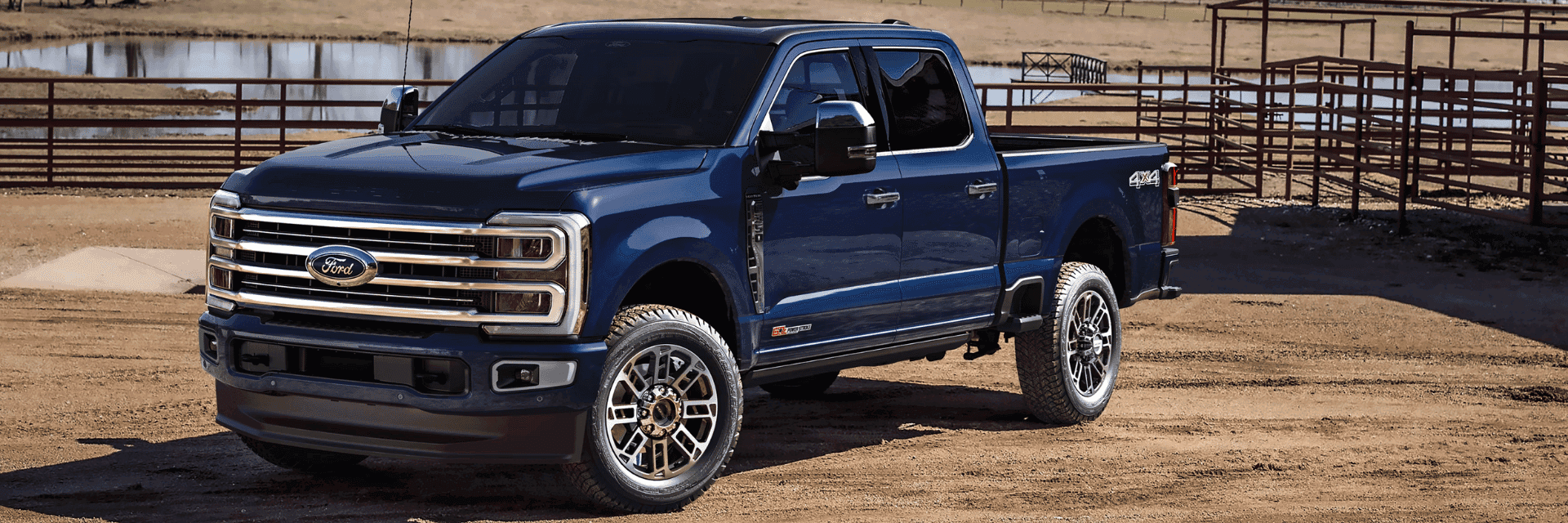
2026 Ford Super Duty® F-350® pickup with the Platinum® Plus Package parked on a farm

Conclusion

A Ford Service Body Truck, built upon the formidable foundation of a Super Duty® chassis and meticulously customized for your specific trade, is an investment in organization, security, and professionalism that pays dividends on every job site.

From the raw power of its gas and diesel engines to the intelligent design of its upfits and the advanced connectivity of its in-cab technology, every aspect of the service truck is engineered to help you work smarter and faster. Whether you are a plumber in Seattle, an electrician in Bellevue, or part of the maintenance team supporting Kent's world-class aerospace and logistics industries, there is a configuration that can be tailored to elevate your operations.

The path to acquiring the right vehicle involves careful analysis of your workload, a clear understanding of your budget, and a partnership with an expert who can guide you through the process.

Ready to build the perfect Ford service truck for your business? Our vehicle experts at Bowen Scarff Ford in Kent are here to help you analyze your workflow, select the right chassis and upfits, and get the job done right. Contact us today or stop by the dealership to start the conversation.

Ford Service Body Truck Frequently Asked Questions We’re here to help answer any questions. Feel free to read over our Frequently Asked Questions below.

Menu

Get Directions

1157 Central Avenue North, Kent, WA, 98032
Bowen Scarff Ford 47.395529, -122.228139.