
Ford Power Promise logo on a blue transparent overlay of a Ford F-150® Lightning® truck

Charging Your Ford EV at Home: The Ultimate Guide

Imagine your typical Washington routine: the morning commute on I-5, a weekend trip to the Cascades, and the regular stop at the gas station. Now, picture a new reality. You pull into your garage, plug in your vehicle like you would your phone, and wake up every morning to a "full tank." This isn't a distant future; for owners of Ford's electric vehicles, it's the daily reality. Home charging transforms the chore of refueling into an effortless overnight task, representing the ultimate convenience in vehicle ownership.

If you're considering a Ford F-150 Lightning, Mustang Mach-E, or E-Transit, you're likely wondering about more than just range and performance. You're thinking about how it fits into your life, your home, and your budget right here in the Kent area. You have questions about cost, installation, and how to make the most of your new electric lifestyle.

That's why we've created this comprehensive guide to walk you through every step. Think of this as your roadmap to making home charging simple, affordable, and perfectly suited to your Pacific Northwest lifestyle.

Your Ford EV Lineup: Matching the Battery to Your Lifestyle

The first and most important decision in your home charging journey happens before you ever plug anything in: choosing the right Ford EV. The vehicle's battery capacity, measured in kilowatt-hours (kWh), is the "tank" you'll be filling each night. This single factor directly influences how long it takes to charge, how much it costs, and ultimately, how well the vehicle fits your daily routine.

The F-150 Lightning brings legendary truck capability into the electric age, offered with two distinct battery configurations to match your needs.

  • Standard-Range Battery: With 98 kWh of usable energy, this option provides an EPA-estimated range of around 240 miles. It's an excellent choice for drivers with predictable daily commutes and local work demands, offering all the power and utility of an F-150 for everyday tasks.
  • Extended-Range Battery: This powerhouse boasts 131 kWh of usable battery energy, pushing the EPA-estimated range up to 320 miles. It's designed for those who frequently tow heavy loads, need to cover more ground between charges, or want the maximum capability for long-distance adventures.

A larger battery provides more range, but it's essential to understand the trade-off. The 131 kWh Extended-Range battery holds about 33% more energy than the Standard-Range version. Consequently, it will take roughly 33% longer to charge and cost 33% more for a full "fill-up" using the same home charger. Choosing a battery that aligns with your typical daily use, rather than just for occasional long trips, ensures a more efficient and cost-effective ownership experience.

The Lightning also has a unique superpower that sets it apart: Ford Intelligent Backup Power. This system can turn your truck into a generator, capable of powering your entire home during one of the Pacific Northwest's notorious windstorm-induced outages.
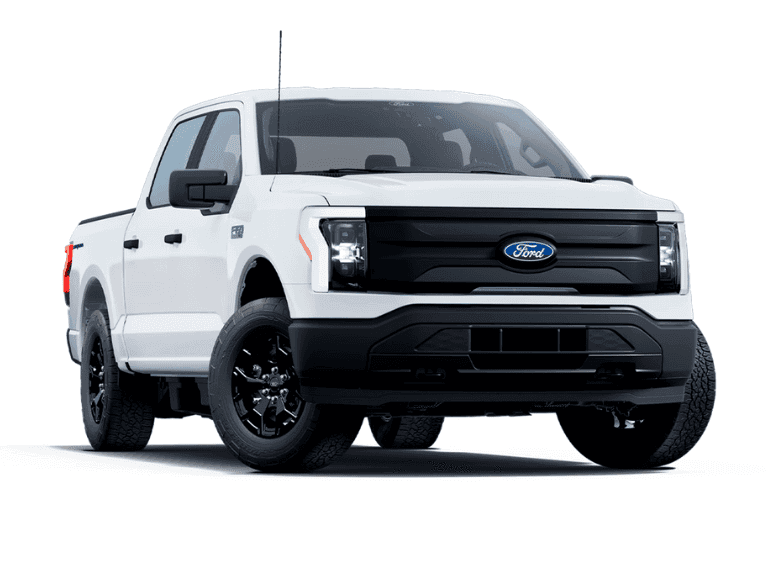
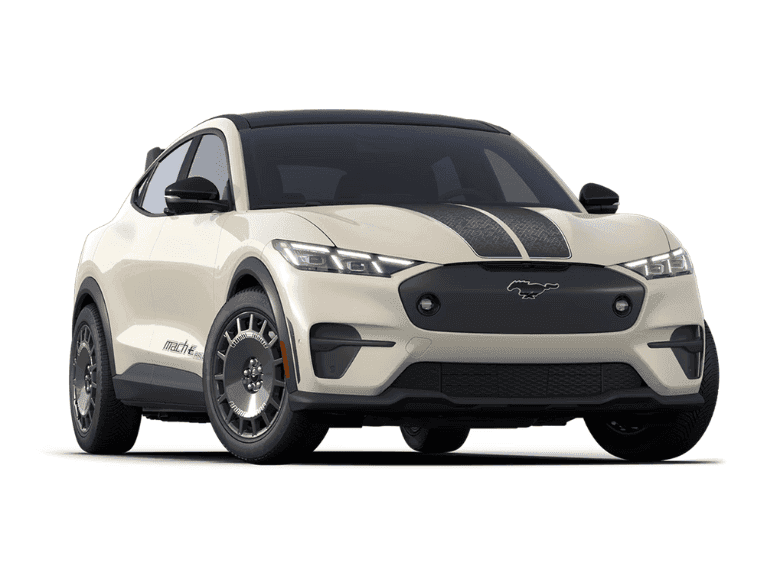
The Mustang Mach-E delivers exhilarating performance in a sleek, versatile SUV package. Like the Lightning, it offers battery options to suit different driving habits.

  • Standard-Range Battery: Featuring approximately 72 kWh of usable capacity, this battery is perfect for daily driving and city commuting, offering an EPA-estimated range of up to 250 miles in some configurations.
  • Extended-Range Battery: With about 91 kWh of usable capacity, this option boosts the range to as much as 320 miles, providing extra peace of mind for longer journeys or for drivers who want a larger buffer.

The Mach-E is an ideal vehicle for the Puget Sound lifestyle, easily handling a commute from Kent to Seattle or a weekend family outing. Its intelligent features, like preconditioning, allow you to warm the cabin and battery while plugged in, preserving range on chilly mornings.
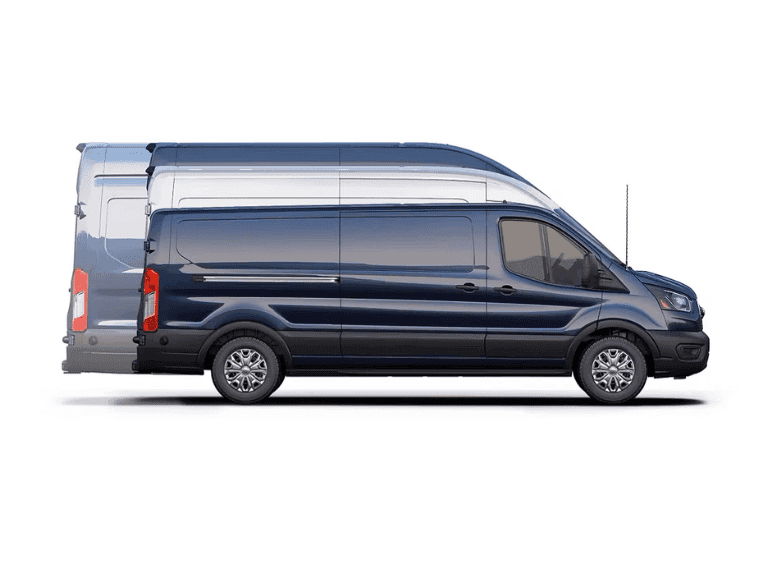
Designed for the demands of commercial use, the E-Transit is an all-electric cargo van perfect for local businesses looking to electrify their fleets.

  • Battery and Range: The latest E-Transit models feature an enhanced 89 kWh usable battery, delivering an EPA-estimated range of up to 159 miles for the low-roof cargo van configuration. This is more than enough for most local delivery routes, service calls, and other commercial tasks.

The E-Transit is a game-changer for businesses. It allows for predictable, low-cost overnight charging at a central depot, eliminating volatile fuel expenses and reducing maintenance costs. With available Pro Power Onboard, it can even power tools and equipment at a job site, removing the need for a separate generator.
The table below provides a quick comparison to help you match a Ford EV to your specific needs.

Ford EVVs: Battery, Range, and Ideal Use Case

Vehicle Model

Battery Option

Usable Battery Capacity (kWh)

EPA-Estimated Range (miles)

Ideal for...

Ford F-150 Lightning

Standard-Range

98 kWh 

Up to 240 

Daily driving, local work, and robust truck utility.


Extended-Range

131 kWh 

Up to 320 

Frequent towing, long-distance travel, and home backup power.

Ford Mustang Mach-E

Standard-Range

~72 kWh 

Up to 250 

Versatile commuting, family trips, and all-around SUV performance.


Extended-Range

~91 kWh 

Up to 320 

Maximum range for peace of mind and long-distance travel.

Ford E-Transit

Extended-Range

89 kWh 

Up to 159 (Low Roof) 

Local business fleets, delivery services, and tradespeople.

Choosing the Right Ford Charger

Once you've chosen your vehicle, the next step is selecting the hardware that will power it. Understanding the difference between charging levels and Ford's specific equipment is key to creating a convenient and efficient home setup.

Level 1 vs. Level 2 Charging:

Think of charging your EV like filling a pool. You have two options: a garden hose or a fire hose. Both will get the job done, but one is far more practical for the task.

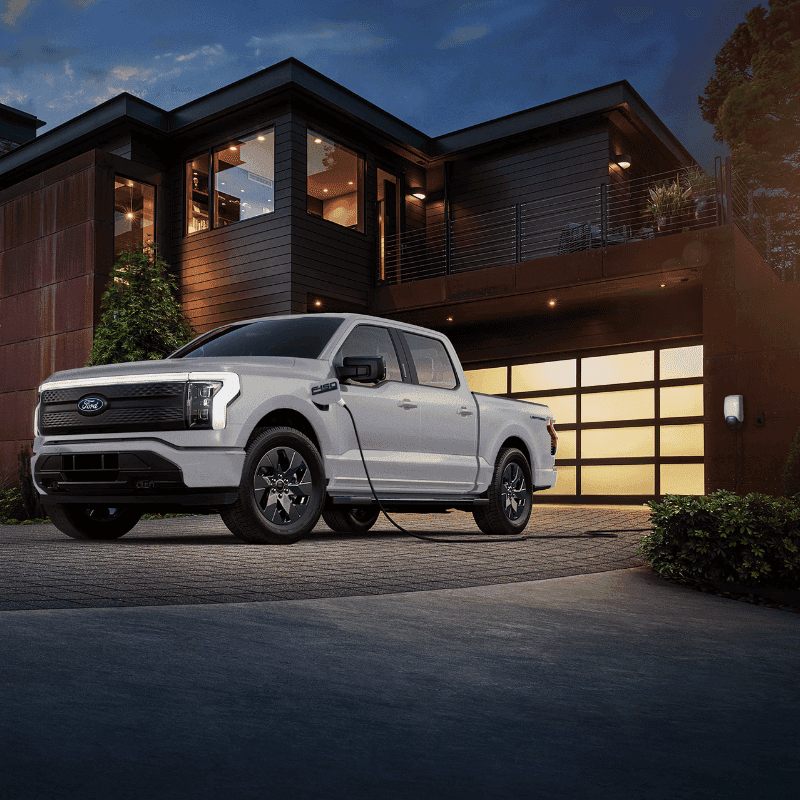
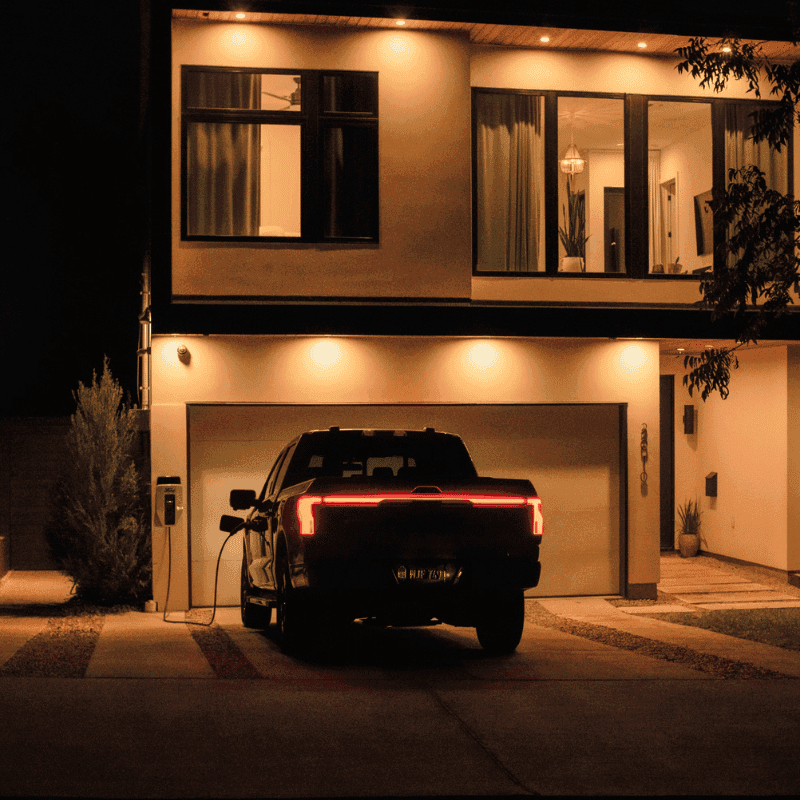
Ford F-150® Lightning® parked and charging in front of a luxury home at night
Ford F-150® Lightning® parked and charging in front of a modern luxury home at night

Ford's Charging Hardware Analyzed

Ford offers three primary home charging solutions, each tailored to different needs and vehicles. All use the industry-standard J1772 connector, making them compatible with any EV on the market today.

It is important that you understand the relationship between the charger's power and your vehicle's ability to accept that power. For example, a customer might see that the Charge Station Pro is rated for 80A and assume it will charge their vehicle faster than the 48A Connected Charge Station. However, the onboard charger in the 2024 and newer F-150 Lightning and Mustang Mach-E models is limited to accepting a maximum of 48A (11.5 kW).

This means that for charging speed alone, the more expensive 80A charger provides no additional benefit over the 48A station for these vehicles. The sole reason for investing in the Ford Charge Station Pro is to get the Intelligent Backup Power feature for an F-150 Lightning.

Understanding this distinction can save you hundreds of dollars and ensure you buy the right equipment for your needs, not just the one with the biggest number on the box.

Ford Home Charging Solutions Compared

Charger Name

Power Output (Amps/kW)

Connection Type

Key Feature

Best For...

Estimated Price

Ford Mobile Power Cord

12A/1.4 kW (120V)
32A/7.2 kW (240V)

Mobile (Plugs into 120V or 240V outlet)

Versatility and portability. Included with vehicle.

Travel, occasional use, or owners with moderate daily driving needs.

Included

Ford Connected Charge Station

Up to 48A/11.5 kW 

Hardwired or Plug-in

Wi-Fi enabled, FordPass app integration, robust daily use.

Most Mach-E and F-150 Lightning owners are seeking the fastest daily charge.

$799 

Ford Charge Station Pro

Up to 80A/19.2 kW 

Hardwired

Enables Intelligent Backup Power for F-150 Lightning.

F-150 Lightning owners who want to use their truck for home backup power.

$1,310 

Getting Powered Up: A Guide to Installation in the Kent Area

Setting up a Level 2 charger is a straightforward process, but it's not a do-it-yourself project. For your safety, to comply with local codes, and to ensure your charger's warranty remains valid, you must hire a licensed electrician.

The Professional Installation Process

Here’s what you can expect when you have a Level 2 charger installed:

Home Assessment
An electrician will visit your home to inspect your main electrical panel. They will check two things: its total capacity (measured in amps) and whether there is physical space for a new, double-pole breaker. Most Level 2 chargers require a dedicated 240V circuit on a 40A, 50A, or 60A breaker.
Permitting
Any work that involves adding a new circuit to your home requires an electrical permit. In Kent, these permits are handled through the city's permitting portal. A qualified electrician will be familiar with this process and will handle all the necessary paperwork and inspections on your behalf, making it a seamless experience for you.
Installation
The electrician will run the correct gauge of wire (for example, 6 AWG copper wire for a 50A circuit) from your panel to your desired charging location in your garage or driveway. They will then either install a 240V NEMA 14-50 outlet for a plug-in charger (like the Ford Mobile Power Cord) or hardwire a wall-mounted station (like the Ford Connected Charge Station) directly to the circuit.

Calculating Your Charging Costs with Puget Sound Energy

One of the greatest benefits of owning an EV is the dramatic reduction in "fuel" costs. In the Kent area, electricity is provided by Puget Sound Energy (PSE), and your charging cost is determined by their rates, which are measured in cents per kilowatt-hour (kWh).

While PSE's standard residential electricity rate is around 14-15 cents per kWh, the real key to maximizing your savings is to enroll in one of their Time-of-Use (TOU) plans. These plans are designed to encourage electricity use when demand on the grid is low, and they are perfectly suited for EV owners.

A TOU plan makes electricity much cheaper during "off-peak" hours (typically overnight and on weekends) and more expensive during "peak" demand hours (weekday mornings and evenings). For an EV owner, this is a massive advantage. You can simply program your vehicle to charge during the cheapest hours while you sleep.

Electricity vs. Gasoline

So how do these costs compare to filling up a traditional gas-powered vehicle? The table below breaks down the cost to travel 100 miles, using PSE's off-peak electricity rate and current average gas prices in the Seattle area.

Electricity vs. Gasoline: A Local Cost-per-Mile Comparison

Vehicle

Fuel/Energy Type

Cost per Gallon/kWh

Vehicle Efficiency

Cost Per 100 Miles

Ford F-150 Lightning

Electricity

~0.064/kWh (PSE Off-Peak) 

~2.0 mi/kWh 

$3.20

Gasoline F-150 (4x4)

Regular Gasoline

~4.58/gallon (Seattle Avg.) 

~20 MPG

$22.90

Ford Mustang Mach-E

Electricity

~0.064/kWh (PSE Off-Peak) 

~3.0 mi/kWh

$2.13

Ford Escape (AWD)

Regular Gasoline

~4.58/gallon (Seattle Avg.) 

~28 MPG

$16.36

The results are clear. By charging your Ford EV at home on an off-peak plan, you can reduce your "fueling" costs by 85-90% compared to a similar gasoline vehicle.

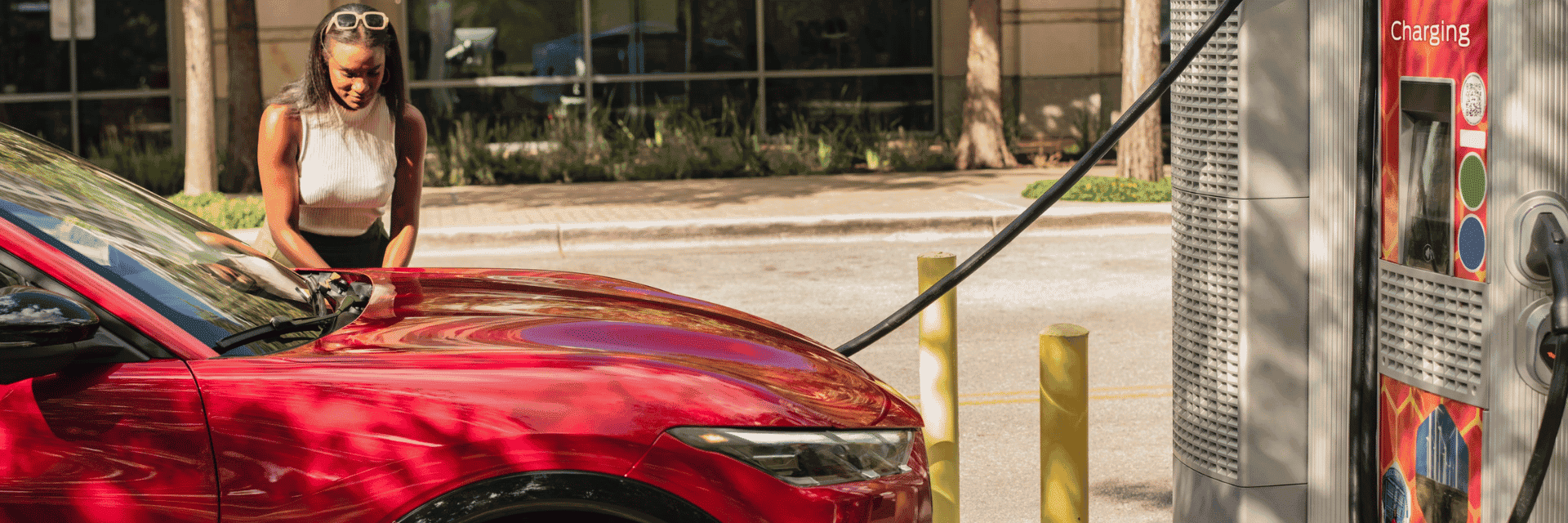
Woman plugging in a red Ford Mustang Mach-E® at a public charging station

Living with Your Ford EV in the Pacific Northwest

Owning an EV in our corner of the country comes with unique considerations, from our cool, wet winters to our adventurous spirit that takes us over mountain passes. Fortunately, Ford has engineered its vehicles with technology that directly addresses these local challenges.

Conquering Pacific Northwest "Range Anxiety"

For many drivers in the Pacific Northwest, "range anxiety" isn't about daily driving alone; it's also about performance during winter or on a trip over Snoqualmie Pass. It's true that cold weather can reduce an EV's range, sometimes by 10% to 40%. This happens for two main reasons: the chemical reactions inside the battery slow down in the cold, and it takes a significant amount of energy to heat the vehicle's cabin.

Ford provides a suite of tools to mitigate these effects and maximize your winter range:

  • Preconditioning: This is your most powerful weapon against winter range loss. By using the FordPass app to set a "Departure Time," you can program your vehicle to warm up its battery and cabin while it's still plugged into the wall. This uses power from your home, not from your vehicle's battery, so you start your trip with a warm cabin and an optimized battery, preserving as much range as possible.
  • Garage Parking: Keeping your vehicle in a garage, even an unheated one, protects it from the harshest cold, snow, and ice, helping the battery stay warmer and more efficient.
  • Smart Heating: Use your vehicle's heated seats and heated steering wheel as your primary source of warmth. They use far less energy than the main HVAC system that heats the entire cabin airspace.
  • Proper Tire Pressure: Cold air causes tire pressure to drop. Underinflated tires create more rolling resistance, which reduces range. Check your tire pressure regularly during the winter months.

Your Digital Command Center: The FordPass App

The FordPass app is the central hub for managing your electric vehicle. Beyond remote start and locking, it also includes useful features for EV owners:

  • Smart Charging: As mentioned, this is where you'll schedule your charging sessions to take advantage of PSE's low off-peak electricity rates, saving you money every night.
  • The BlueOval Charge Network: For trips beyond the Puget Sound, the FordPass app is your key to North America's largest public charging network. Recently, this network has expanded to include access to thousands of Tesla Superchargers, dramatically increasing your fast-charging options and making long-distance travel easier than ever. Ford EV owners can use a simple adapter to access these chargers, and payment is handled seamlessly through the FordPass app.

Backup Power

The F-150 Lightning offers a feature that feels tailor-made for our region: Ford Intelligent Backup Power. During power outages caused by wind and snowstorms, this system can transform your truck into a powerful home generator.

To enable this feature, you need three components: an F-150 Lightning, the 80A Ford Charge Station Pro, and a Home Integration System. When the power goes out, the system can automatically switch over, supplying up to 9.6 kW of electricity from the truck's battery to your home's electrical panel. A fully charged Extended-Range F-150 Lightning can power a typical home for up to three days, keeping your lights on, your refrigerator cold, and your family safe and comfortable. This technology turns your vehicle into a key part of your home's energy resilience.

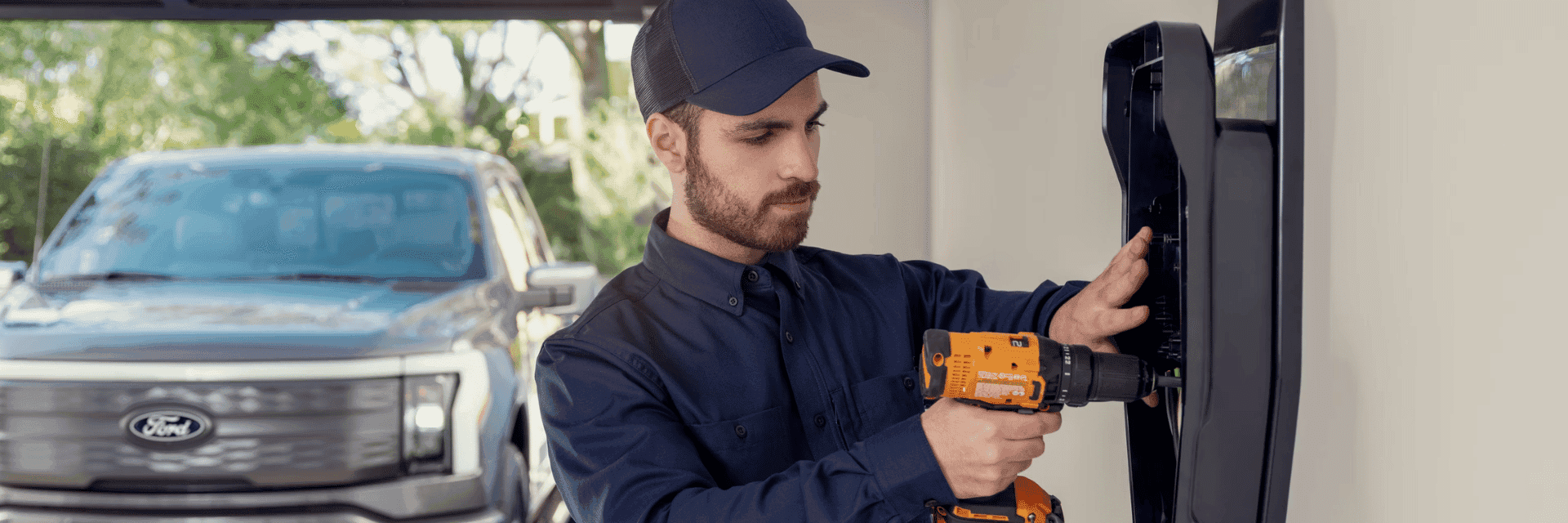
Technician installing a home charger in a garage with a Ford F-150® Lightning® parked in the driveway and visible through the open garage door

Conclusion

As you’ve seen, charging your new Ford EV at home in the Kent area is more than just possible—it's convenient, remarkably cost-effective, and packed with smart technology that makes it simple. By choosing the right vehicle and charger for your needs, taking full advantage of Puget Sound Energy's off-peak rates with the FordPass app, and stacking all the available incentives, you can save thousands of dollars and may never have to visit a gas station again.

We know this is a lot of new information, but you don't have to figure it out alone. At Bowen Scarff Ford, our non-commissioned product specialists are experts in Ford's electric lineup and are here to act as your trusted guides. We've helped many of your neighbors in Kent, Renton, and Auburn make the switch, answering these very questions and ensuring they have the perfect setup for their needs.

So, whether you have questions about which battery is right for you, how to claim a rebate, or what to ask an electrician, we're here to help. Stop by our showroom on Central Avenue North in Kent, or give our team a call. Let's talk about what your fully charged future looks like.

Ford EVs Frequently Asked Questions We’re here to help answer any questions. Feel free to read over our Frequently Asked Questions below.

Menu

Get Directions

1157 Central Avenue North, Kent, WA, 98032
Bowen Scarff Ford 47.395529, -122.228139.