
Ford F-150 Content
Factory Orders Are Now Open - Further Details Below!

Ford Work Trucks Built for Your Business

Simple Pressure-Free Ordering

Build your 2026 Ford chassis cab with the ideal body for your work with ease and confidence.

Nationwide Shipping

We ship Ford work trucks anywhere in the United States, always guaranteed under MRSP.

Speak to a Live Ford Commercial Vehicle Ordering Specialist | 253-813-5068

Ford F-150 Article

Dump Body vs. Platform Body: Selecting the Ideal Ford Work Truck for Pacific Northwest Businesses

The work truck you choose directly impacts your daily operations, productivity, and ultimately, your profitability. When you're running a business in the Pacific Northwest, especially navigating Seattle's hills and the region's climate, your truck selection becomes even more vital to your success.

This guide helps you cut through the complexity and choose the Ford work truck configuration that will maximize your business efficiency.

We'll show you how Ford's dump body and platform body trucks solve real challenges you face every day, explore the ownership advantages that protect your investment, and reveal customization options that adapt to your specific Pacific Northwest operations.

Whether you're hauling wet aggregates through Seattle's hills or transporting equipment to remote job sites, the right Ford truck configuration can eliminate your operational challenges.

Let's find the perfect match for your business needs.

Truck Body Types Comparison
Understanding the Core Difference: Ford Dump Body vs. Platform Body
The fundamental distinction between Ford dump body and platform body work trucks is in their cargo bed design and inherent functionality, with each engineered to optimize different types of hauling and unloading operations.
Dump Body Trucks:
Power and Precision for Bulk Materials
Platform Body Trucks:
Versatility for Diverse Cargo
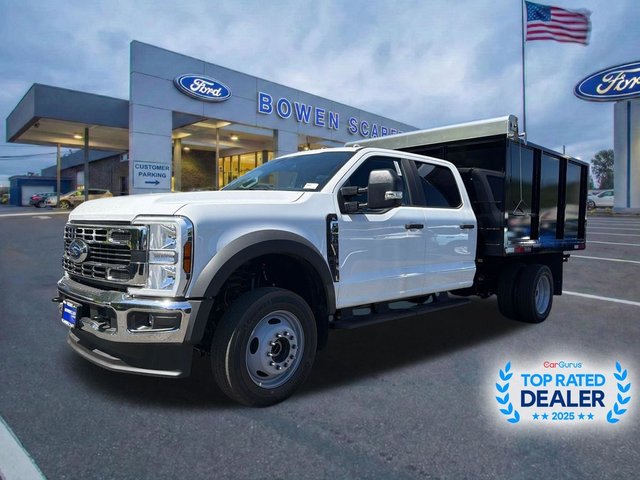
A dump body truck has a hydraulically operated cargo bed that can be raised and tilted, facilitating the efficient unloading of materials by gravity. This design transforms a Ford chassis cab into a highly capable vehicle for handling bulk materials such as gravel, sand, mulch, dirt, or various forms of construction debris.
The hydraulic lifting mechanism is seamlessly integrated with the truck's Power Take-Off (PTO) system, allowing the dump function to operate effectively whether the vehicle is stationary or in motion. This live-drive PTO functionality is a significant advantage for operations requiring continuous material handling.
The primary benefit of dump bodies lies in their speed and efficiency when unloading loose materials, eliminating the need for manual shoveling or additional equipment and enabling drivers to empty entire loads in seconds.
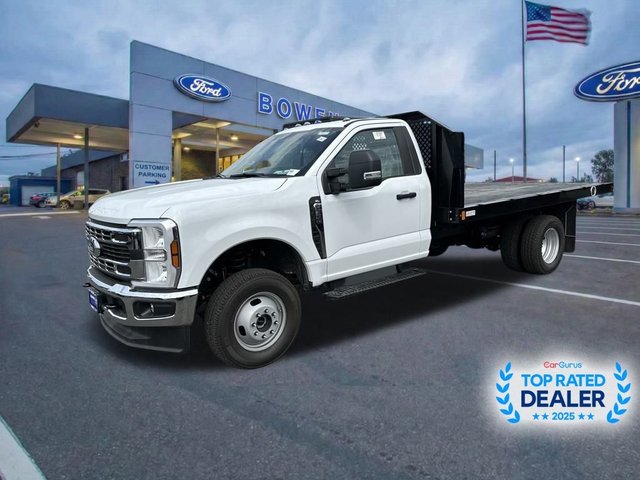
Commonly referred to as flatbed trucks, platform body trucks feature a completely flat, open cargo surface devoid of sides or a built-in tilting mechanism. This configuration offers unparalleled versatility for loading and securing a wide array of cargo, including various construction materials, diverse types of equipment, heavy machinery, and irregularly shaped items.
The flat design provides unobstructed access from all sides, simplifying the loading process with forklifts, cranes, or manual placement. Platform bodies are particularly well-suited for scenarios where cargo varies significantly in size and shape, requires multiple tie-down points for secure transport, or demands precise placement during the unloading process.
Key Structural Differences
Ford's chassis cab foundation, known for its fully boxed frame design and reinforced mounting points, provides the necessary structural integrity for both dump and platform body configurations. This robust design, featuring high-strength all-steel frames and military-grade aluminum alloy bodies, reduces weight without compromising durability and offers rust-resistant qualities crucial for vehicle longevity.
Dump Body Complexity
However, sump bodies inherently require additional hydraulic components, including cylinders and specialized mounting hardware, which contribute to their greater mechanical complexity.
Platform Body Simplicity
In contrast, platform bodies typically mount directly to the chassis frame using standard hardware, resulting in a simpler and more straightforward installation.
Despite the inherent simplicity of a platform body, the extensive availability of Ford's Power Take-Off system across its chassis cab lineup (from F-350 through F-750) introduces a level of versatility that extends beyond basic flatbed functionality.
Strategic Investment Advantage
The consistent inclusion of live-drive PTO capability means that a platform body can be equipped with various hydraulically powered tools, such as cranes or wood chippers, effectively expanding its operational scope.

This fundamental adaptability of Ford's chassis cab platform means that an initial investment offers significant flexibility for future specialized equipment or evolving operational needs, allowing businesses to strategically plan for future demands and optimize their long-term investment.

Matching Your Ford Work Truck to
Pacific Northwest Industries

Dump Body vs Platform Body Comparison

Your choice between a dump body and a platform body becomes clearer when you consider your specific industry requirements. If you operate in the Pacific Northwest, understanding these industry-specific patterns, along with regional environmental and logistical considerations, helps you select the most efficient Ford work truck for your business.

Dump Body

If you're in any of these industries, dump bodies overwhelmingly deliver the best operational results:

  • Waste Management: Your operations require rapid loading and even faster dumping, making dump bodies your near-universal choice for efficiency across numerous daily stops.
  • Excavation & Heavy Construction: When you're moving substantial quantities of gravel, sand, dirt, or concrete daily, you need the hydraulic power of a dump body to save countless hours of manual labor. In the Pacific Northwest, where wet soil conditions are common, Ford's robust hydraulic system becomes particularly valuable for your heavier, stickier loads, ensuring consistent performance even when weather challenges your operations.
  • Mining Operations: Similar to heavy construction, if your mining operations involve transporting massive volumes of raw materials in demanding, rugged conditions, the dump function becomes indispensable for your high-volume, heavy-duty material transport needs.
  • Road Crews: When your tasks involve laying asphalt or moving aggregate, the precise dumping control offered by a dump body ensures your materials are placed exactly where you need them, helping you achieve faster work zone clearance and enhanced safety.
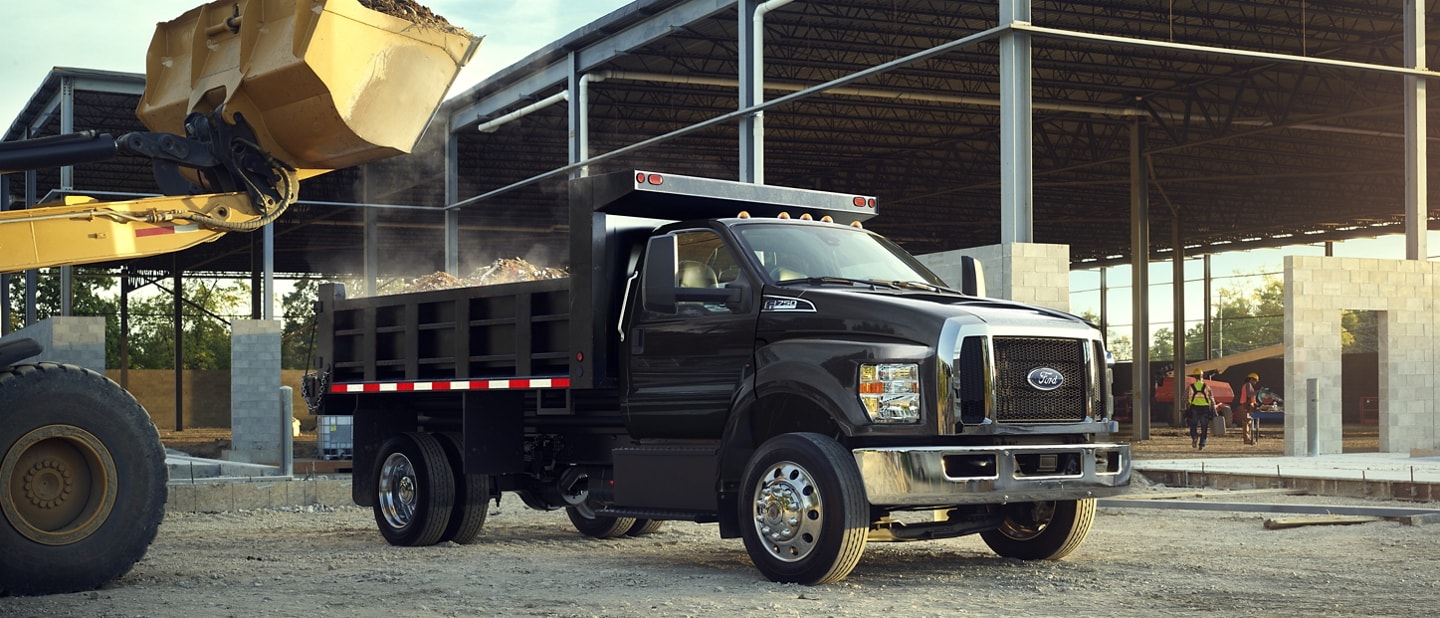
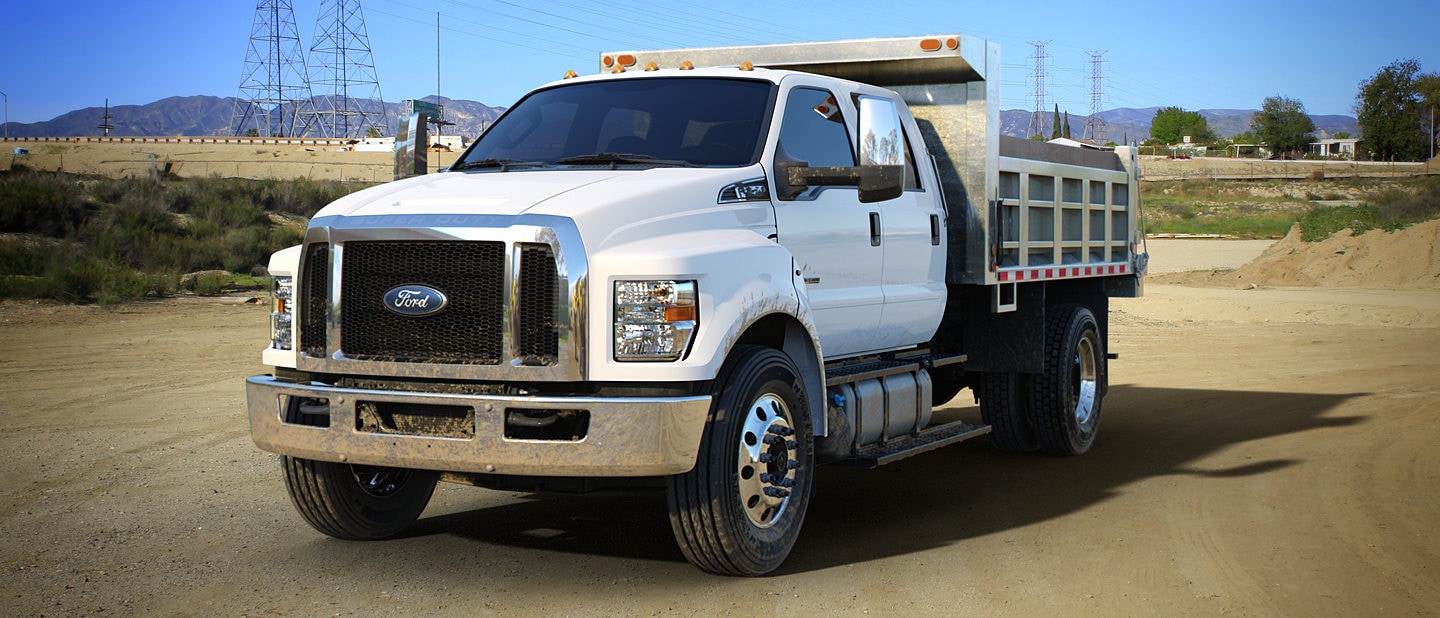
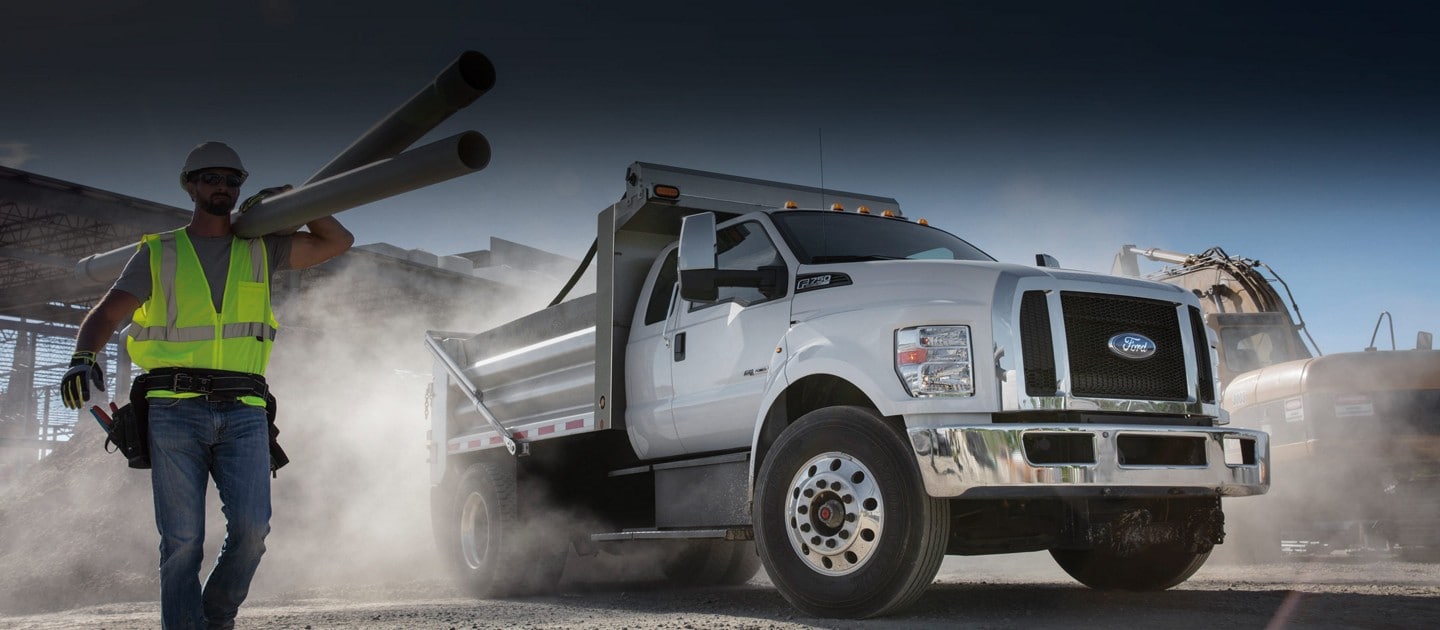
Ford Dump Body Truck

Platform Body

If your operations demand flexibility and secure transport of varied items, platform bodies are for you:

  • Equipment & Machinery Transport: When your business focuses primarily on moving heavy equipment, machinery, or items requiring careful securing and positioning, you'll find platform bodies invaluable. Their flat, open surface and multiple tie-down points effectively accommodate the diverse sizes and shapes you handle.
  • Manufacturing Operations, Utility Companies, Auto Parts Suppliers, Machinery Dealers, & Equipment Rental: These sectors benefit significantly from the loading flexibility of platform bodies, which allow easy access from all sides for your forklifts or cranes, plus secure transport of your diverse items. If you're a utility company, you'll particularly appreciate how platform bodies pair with specialized equipment like bucket lifts.
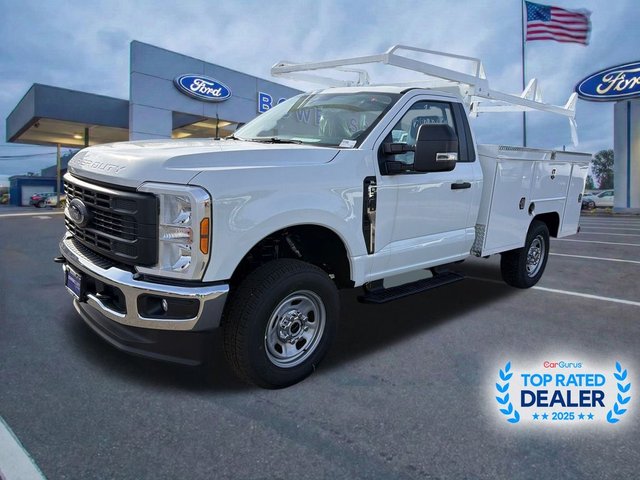
Ford Platform Body Truck

Dual-Use Scenarios

Both configurations work for some industries:

  • Landscaping: If your primary tasks involve delivering bulk materials like soil, mulch, or decorative stone, a dump body delivers high efficiency. However, if you frequently haul equipment (mowers, aerators, trimmers) or perform installations requiring precise material placement, a platform body offers you greater utility.
  • Mixed Fleet Approach: Many businesses, especially in construction, successfully employ a mixed fleet approach, using dump trucks for material delivery and platform bodies for equipment moves, thereby optimizing their fleet for diverse operational demands.
Mixed Fleet of Dump and Platform Body Trucks

Pacific Northwest Specific Industry Considerations

The unique characteristics of the Pacific Northwest introduce additional considerations for your vehicle selection:

  • Forestry & Logging: If you're in this industry, your forestry operations frequently require platform bodies equipped with specialized log bunks for transporting timber. You may also utilize dump bodies for hauling wood chips or clearing debris from your logging sites.
  • Marine & Waterfront Construction: When your projects run along Seattle's extensive waterways, you often need both dump bodies for bulk material movement (dredging spoils, riprap) and platform bodies for transporting specialized marine equipment or construction components to your dockside locations.
Pacific Northwest Commercial Operations
Ford Work Truck Industry Guide

Find Your Perfect Ford Work Truck Match: Pacific Northwest Industry Guide

Industry Sector Primary Body Type Recommendation Why It Fits Common Ford Models (Chassis Cab)
Construction & Excavation Dump Body (for bulk materials) & Platform Body (for equipment) Efficiently moves wet aggregates/debris; transports heavy machinery on varied terrain. F-350, F-450, F-550, F-600, F-750
Landscaping & Arboriculture Dump Body (for soil, mulch, chips) & Platform Body (for equipment, large trees) Handles bulk deliveries in wet conditions; versatile for diverse job site needs (e.g., chippers). F-350, F-450, F-550
Waste Management & Recycling Dump Body Rapid, high-volume unloading of waste and recyclables, crucial for efficiency in urban collection routes. F-550, F-600, F-650, F-750
Utilities & Infrastructure Platform Body (often with cranes/lifts) & Dump Body (for debris) Transports specialized equipment for line work, repairs, and clears construction/storm debris. F-450, F-550, F-600, F-650, F-750
Heavy Equipment Transport Platform Body Securely hauls diverse, often oversized, machinery to and from job sites, including those on uneven ground. F-450, F-550, F-600, F-650, F-750
Forestry & Logging (PNW Specific) Platform Body (with specialized bunks) & Dump Body (for wood chips/debris) Transports logs and processed timber; clears forest debris from challenging terrain. F-550, F-600, F-650, F-750

Note: Model recommendations are based on typical industry requirements. Specific applications may require different configurations based on load requirements and operational conditions.

Ford Chassis Cab Capability: Pacific Northwest Operations

Ford Chassis Cab Capability: Powering Your Pacific Northwest Operations

When it comes to chassis cabs, Ford offers everything from the versatile F-350 Super Duty all the way up to the heavy-duty F-750. These trucks make excellent platforms for dump beds and flatbeds alike. Understanding what each truck can actually handle in terms of power and payload is crucial if you want to pick the right one for your operation.

Engine Options and Performance

Ford offers a selection of powerful engines designed to meet diverse commercial demands:

✲ 7.3L OHV PFI Gas V8
This naturally aspirated engine is engineered for an optimal combination of power and efficiency, delivering 335 horsepower and 468 lb-ft of torque. It is a reliable choice for strenuous duty, capable of idling for extended periods, and offers impressive durability and performance. For some configurations, a 6.8L Gas V8 is also available, providing 405 HP and 445 lb-ft of torque.
✲ 6.7L Power Stroke® V8 Turbo Diesel
This available twin-turbo engine boasts a rating of 330 horsepower and a commanding 950 lb-ft of torque. It is also engineered to handle up to 20% biodiesel, offering fuel flexibility. For even more demanding tasks, a 6.7L High Output Power Stroke Diesel is available on some F-350 models, pushing the limits with 500 HP and an astounding 1,200 lb-ft of torque. Diesel engines often include a driver-activated engine exhaust brake, which is invaluable for managing heavy loads on downhill grades, a common scenario in the hilly and mountainous terrain prevalent in the Pacific Northwest.

The selection of an engine and transmission system is about raw, usable, and flexible power for specific applications. For a dump body, a powerful engine and a robust PTO are crucial for rapid, repeated lifts of heavy, potentially wet materials. For a platform body equipped with a crane or other hydraulic tools, the PTO's ability to operate while the truck is stationary (or even creeping for precise movements) is paramount for operational efficiency and safety.

The choice between gas and diesel engines also has long-term implications for fuel costs, maintenance complexity, and overall operational efficiency. For instance, a landscaping company might find a gas engine more cost-effective for intermittent PTO use and lower initial investment, while a heavy construction firm operating in the PNW's hilly terrain would likely prioritize a diesel engine for its superior torque and the added safety of engine exhaust braking when hauling constantly heavy loads.

Transmission and PTO: The Heart of Your Upfit

All Ford Super Duty and Medium Duty chassis cabs are equipped with the TorqShift® 10-Speed Automatic Transmission. This transmission is known for its smooth shifts and is specially engineered to handle heavy demands.

Payload, GVWR, and Towing Capacities

Ford's chassis design accommodates a wide variety of upfits, with Gross Combination Weight Ratings (GCWR) ranging from 20,000 to an impressive 50,000 pounds.

Ford Super Duty and Medium Duty chassis cabs maintain impressive towing capabilities regardless of body style. For instance, the Super Duty can tow up to 40,000 lbs with available high-capacity trailer tow packages for heavier applications. This ensures that your truck can handle primary hauling duties while still being capable of occasional trailer work, a versatility that is highly valued in the diverse operational environments of the Pacific Northwest.


Beyond the Purchase: Ownership Considerations

Beyond the Purchase: Ownership Considerations for Pacific Northwest Businesses

Acquiring a Ford work truck represents a significant investment, but the journey extends far beyond the initial purchase. Long-term ownership involves ongoing considerations such as maintenance, resale value, and insurance costs, all of which can be uniquely influenced by operating in the Pacific Northwest.
Maintenance and Longevity: Keeping Your Ford Running Strong

While both dump body and platform body trucks share the same robust Ford chassis foundation, their specific maintenance needs differ due to their distinct functionalities. Dump bodies, with their added hydraulic systems, generally require more attention, representing a trade-off for their enhanced capabilities.

Dump Body Care

Regular monitoring of the hydraulic system is essential for dump bodies. This includes routinely checking hydraulic fluid levels, meticulously inspecting hoses for any signs of wear or leaks, and ensuring the lift mechanism operates smoothly and without hesitation.
Common issues that can arise include slow or erratic lifting, complete failure to lift, unusual noises (such as whining or knocking), intermittent operation, and electrical problems like blown fuses or faulty solenoids.

These issues often stem from low or contaminated fluid, air trapped in the system, or worn hydraulic components.
To repair, we recommend checking and topping off hydraulic fluid, replacing it if contaminated, bleeding air from the system, and inspecting/replacing faulty hydraulic components as needed. Adhering to scheduled service for the PTO system is also critical to avoid downtime.
Ford's live-drive PTO functionality allows operation while parked or in motion, but consistent maintenance is still required for optimal performance. If you still need extra help, Bowen Scarff is available to help. Just let us know how here.

Platform Body Care

In contrast, platform bodies are mechanically simpler, lacking a hydraulic system or moving bed. Maintenance for these bodies primarily focuses on structural integrity. Key checks include ensuring the body is securely mounted to the chassis, verifying that tie-downs and lighting are in good condition, and monitoring the flatbed surface for wear over time.
Common structural issues for commercial truck bodies, including flatbeds, can involve rust, dents, scratches, and damage to lights or bumpers. Rust is a particularly significant concern for commercial trucks, especially those operating in harsh climates like the Pacific Northwest, where persistent moisture can accelerate corrosion and weaken bodywork.
Regular pressure washing of the exterior and undercarriage can help remove dirt, grease, and debris that contribute to rust and premature aging. Structural damage, such as issues with the chassis or frame, may require specialized repairs like straightening or welding to restore functionality and safety.

Resale Value

The resale value of a commercial truck is influenced by several factors, including its age, mileage, maintenance history, and market demand.
Dump trucks are often considered a 10-year depreciation asset due to their specific, sometimes limited, use and periods of inactivity on short hauls. While the initial purchase price of new dump trucks can be high, the gap between new and late-model used dump trucks may not always be substantial. However, a well-maintained used dump truck with solid specifications can offer better long-term value, even with higher mileage, compared to a cheaper truck with underlying issues.
Platform bodies, or flatbeds, are more versatile, making them an appealing option for businesses seeking to enhance their fleets economically. Trucks with dual rear wheels (dually trucks) often maintain their value better due to increased load capacity, stability, safety, and superior towing capability.
For both body types, regular maintenance is the most critical factor in retaining value. Addressing minor issues and making essential repairs before listing, such as replacing worn components or ensuring that lighting and electrical systems work, can significantly increase resale value. Upgrading key features like installing LED lighting or adding a liftgate can also enhance value and demand.
Ford Upfitting and Customization

Upfitting and Customization: Tailoring Your Ford Work Truck

Ford Pro is committed to making vehicle upfitting as convenient and effective as possible, enabling businesses to build workhorses precisely tailored to their needs.

This is particularly relevant for dump and platform bodies, which are essentially custom upfits on a Ford chassis cab.

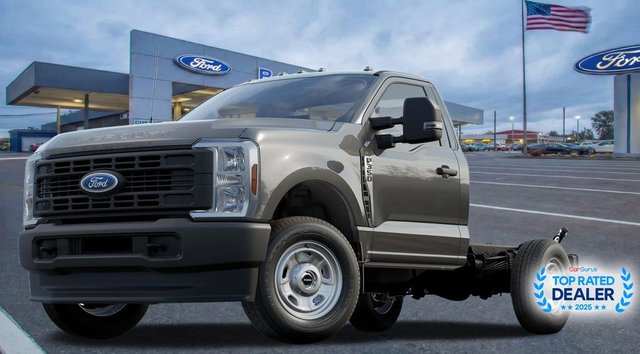
Ford Chassis Cab Image

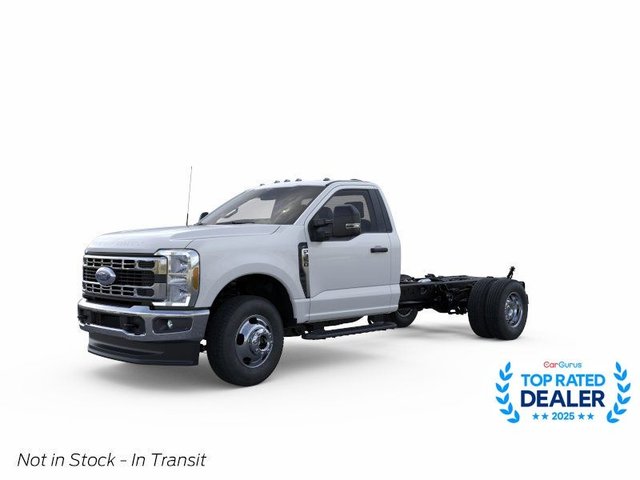
Ford's chassis cabs, including the Super Duty F-350 through F-600 and medium-duty F-650 and F-750, are designed to be upfit-friendly. They offer integrated switches, wiring, mounting points, and systems like snow-plow prep, lighting, and more, making them ready for a wide range of accessories and modifications.

Ford Pro Vehicle Integration System 2.0

A key innovation is the Ford Pro Vehicle Integration System 2.0. This hardware interface provides a single entry point to the chassis cab's electrical architecture, digitally connecting the upfit to the vehicle. This system simplifies installation for upfitters and allows drivers to control peripheral devices, such as salt spreaders or light boxes, directly from the SYNC® screen inside the cab. This seamless integration helps upfitters install modifications efficiently and reliably, while allowing them to easily create custom controls for customers.

Comprehensive Upfit Solutions

Ford vehicles can be upfitted for almost any task, from ambulances and bucket trucks to box trucks, dump trucks, and flatbeds. Specific upfit solutions for dump and platform bodies include:

Dump Truck Upfits

Ford chassis cabs, with their PTO and vehicle electrical systems, provide the foundation for powerful dump trucks that meet various weight class requirements. Accessories can include bedliners, wheel locks, roll covers, and deflectors.

Flatbed Truck Upfits

Ford offers chassis with the necessary weight class, wheelbase, and power to build versatile flatbeds. Common accessories for flatbeds and pickup trucks include ladder racks, storage racks, toolboxes (e.g., underbody boxes), portable cranes, and various safety and security features like strobe bars and backup alarms. Interior accessories such as floor mats, seat covers, and console vaults are also available.

Dump vs Platform Body Conclusion

Conclusion

When you're choosing between a dump body and a platform body for your Ford work truck, especially here in the Pacific Northwest, it really comes down to what you're hauling every day.

Dump bodies are the go-to choice if you're moving a lot of bulk materials, dirt, gravel, debris, or anything you need to unload quickly. Construction crews and waste management companies rely on them because the hydraulic lift does the heavy lifting for you. The downside? Those hydraulic systems need regular maintenance to keep working smoothly.

Platform bodies are different—they're like having a big, flat workspace on wheels. You can load equipment, lumber, or anything oddly shaped from any side. They're simpler, too, which usually means fewer things can break down.

Ford's trucks, from the F-350 up to the F-750, work well with either setup. You've got gas and diesel engine options, plus that 10-speed transmission that handles heavy loads without breaking a sweat. The F-600 is interesting because it gives you more capability than you'd expect from its size class.

Working in our region adds a few wrinkles to consider. All that rain means dealing with wet, heavy materials that stick to everything, so dump bodies need to handle more challenging unloads. In Seattle, you're also dealing with tight streets and parking, so truck size matters more than it might elsewhere.

With so many configurations and specs to consider, it's worth talking to someone who knows both Ford's lineup inside and out and understands how trucks actually perform in our region. At Bowen Scarff, we've seen what works (and what doesn't) across different industries in the Pacific Northwest, which helps when matching the right truck to your specific needs.

Have questions or want to explore your upfit options in person? Contact us at Bowen Scarff. We'll help you find the right Ford truck for the job and keep your business moving.

How Does a Ford Work Truck Order Reservation Work?

one

Reserve

Fill out the reservation form and submit your request.

one

Order

We will reach out shortly before order banks open this summer to finalize configurations, verify pricing, and place your order.

one

Ship

We will notify you when Ford Work Truck production and deliveries begin.

Save your model selection and your spot. You will be able to complete the configurations on your Ford Work Trucks before you finalize your order.

 
Ford Dump Body vs Platform Body FAQ

Ford Dump Body vs Platform Body FAQs

We're here to help answer any questions. Feel free to read over our Frequently Asked Questions below.

Choose a platform (flatbed) body when your business needs flexibility in hauling equipment, machinery, building materials, or odd-sized items that require tie-downs or forklift loading.

Ford's chassis cab lineup—from Super Duty F‑350 through F‑600 and medium-duty F‑650 —supports both dump-body and platform-body configurations. They're built on a heavy-duty, boxed frame that's upfit-friendly, offering hydraulic dump bodies or flatbed options depending on your needs.

Yes! Both dump and platform models come ready for upfitting: integrated switches, wiring, mounting points, and systems like snow-plow prep, lighting, and more.

Menu

Get Directions

1157 Central Avenue North, Kent, WA, 98032

Contact Commercial

  • This field is for validation purposes and should be left unchanged.
Bowen Scarff Ford 47.395529, -122.228139.